Dambuster of the Day No. 68: Alan Gillespie

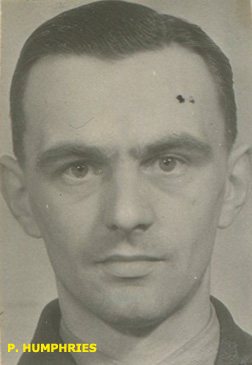
Gillespie ©PH lores

[Pic: Peter Humphries]

Plt Off A Gillespie DFM
Bomb aimer

Lancaster serial number: ED927/G

Call sign: AJ-E

Second wave. Crashed on outward flight.

Alan Gillespie was born on 16 November 1922 in Hesket, Westmorland. He was the second of the four children of Robert and Margaret Gillespie. His father was a railway porter. The family then moved to Long Marton, near Appleby. Alan Gillespie went to the village school in Long Marton and then Appleby Grammar School. After leaving school he worked as a clerk in a solicitor’s practice before volunteering for the RAF in 1940. He was eventually selected for aircrew and sent to Canada for training in September 1941.

After returning to the UK, he underwent further training and met up with Norman Barlow and Leslie Whillis at 16 OTU in July 1942. All three were eventually posted to 61 Squadron in September 1942, and did their first operation together over the Alps to Turin on 20 November. 


By March 1943, Barlow and Gillespie had both completed their tours. On their penultimate operation, a trip to Berlin, flight engineer Leslie Whillis had been left behind, in favour of Gp Capt Reginald Odbert, flying as second pilot. Odbert was the station commander at RAF Syerston, a popular Irish rugby international who had joined the RAF before the war and captained the RAF rugby team. He was killed in a flying accident in June 1943.


Gilliespie’s tour ended with a recommendation for a DFM. The citation read:
‘This Air Bomber has carried out 30 successful sorties on all the main targets in Germany and Italy, including six attacks on Essen and five on Berlin. He has frequently obtained excellent photographs, one of his best being the aiming point on Krupps. He has shown himself cool and collected under heavy fire in the target area and has set an excellent example to others in his crew and the rest of the squadron. Strongly recommended for the award of the Distinguished Flying Medal.’

When Barlow set about putting together a crew who would accompany him on to 617 Squadron Gillespie and Whillis, who had been with him since their training days, were obvious choices. Both were commissioned two days before the Dams Raid. Whether they had time to move from the Sergeants’ to the Officers’ Mess is not recorded. 


It was therefore as a newly fledged Pilot Officer that Alan Gillespie met his end. Flying in the nose of the Lancaster at treetop level, he may have seen the pylon they hit near Haldern a split second before impact. 


Alan Gillespie and his comrades were buried first in Dusseldorf, but after the war they were reinterred in Reichswald Forest War Cemetery. The DFM he had won a few weeks before was presented to his family posthumously. The official notice appeared in the same July 1945 issue of the London Gazette as the one for Charlie Williams.

More about Gillespie online:
Entry at Commonwealth War Graves Commission
Entry at Aircrew Remembered website

KIA 16.05.43

Rank and decorations as of 16 May 1943.
Sources:
Richard Morris, Guy Gibson, Penguin 1995
John Sweetman, The Dambusters Raid, Cassell 2002
Eric Fry, An Airman Far Away, Kangaroo Press 1993

The information above has been taken from the books and online sources listed above, and other online material. Apologies for any errors or omissions. Please add any corrections or links to further information in the comments section below.

Further information about Alan Gillespie and the other 132 men who flew on the Dams Raid can be found in my book The Complete Dambusters, published by History Press in 2018.

Channel 4: Mission to confuse

Tirpitz_(AWM_SUK14095)

Channel 4 programming bods have come up with what sounds a very confusing documentary, The Dambusters Great Escape –Secret History, to be aired tonight at 8pm UK time.
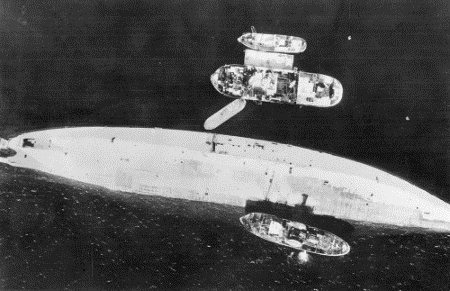
Can’t imagine what the thinking is behind this, because the subject is about the operation which finally sank the German battleship the Tirpitz, in November 1943 1944, which had nothing to do with the Great Escape. On this raid, the Dambusters, in the shape of 617 Squadron, were accompanied by another Lancaster squadron, 9 Squadron, also armed with Tallboy bombs.
However, the programme is presented by the completely sane Patrick Bishop, the distinguished author of Bomber Boys and other great books, so we can only hope that the bonkers title won’t reflect what should be a lucid presentation of interesting content.

Dambuster of the Day No. 67: Charles Williams

crwilliams-small

Flg Off C R Williams DFC
Wireless operator

Lancaster serial number: ED927/G

Call sign: AJ-E

Second wave. Crashed on outward flight.

Charles Rowland Williams was born on 19 March 1909 in Townsville, Queensland. He was the middle child of the three surviving children of sheep station manager Horace Williams and his wife Hedwige or Helene (she used both names). His mother seems to have decided to travel to Townsville in order to have the baby. At the time of his birth the family lived in Winton, but then lived at a series of other sheep stations before moving to Telemon, a station near Hughenden, when he was 10 years old. This was a small settlement in inland Queensland, some 250 miles west of Townsville. Australian country districts did not have elementary schools in those days so Williams was tutored at home until he went to Townsville Grammar School as a boarder at the age of 12.

Leaving school at 16, he went home to work on the station his father managed. He also became a skilled mechanic and took up building wireless sets and photography as hobbies. The great crash of the early 1930s led to his father losing his job so, as part of a syndicate, the family bought their own station which they had to work hard to build up.

Like many young men of his generation, Williams had long wanted to fly and took some flying lessons at the aero club in Townsville. When war came, he was already 30 years old. Both he and his brother could have avoided military service on the grounds that their elderly father was ill, and could not run the property on his own but they both joined the army reserve. They agreed between themselves that Doug as the elder should remain in the army so that he could stay in Australia to take responsibility for the family, but younger brother Charlie should volunteer for the air force.

In February 1941, some seventeen months later, Williams began his training. He was posted to Sydney, and then on to a training school in rural New South Wales. By then almost 32, he was mustered as a wireless operator/air gunner. After training, he was commissioned and then posted to England.

He arrived in Bournemouth in November 1941, a few weeks before Pearl Harbor. This traumatic event had another, often overlooked, consequence besides bringing the USA into the war. The Australian government quickly realised how exposed their country was to possible invasion by the Japanese and many aircrew under training were kept back in case they were needed at home.

Caught in a training bottleneck, Williams remained at Bournemouth until being assigned to No 1 Signals School at Cranwell in the middle of February, and then to 14 OTU at Cottesmore in the first week of April. However, his operational experience began very suddenly, when the unit was required to send several Hampdens on the first Thousand Bomber Raid, on Cologne on 30 May 1942. He was also sent on the later raids on Essen and Bremen.

By September, he was ready for operations and had arrived at 61 Squadron at Syerston, as wireless operator in a Lancaster crew skippered by Flg Off Brian Frow, an experienced pilot, who went on to survive the war and rise to the rank of Air Commodore. Their first operation was a raid on Munich and they flew on seven more before Frow finished his tour.

In December, Frow was replaced by a New Zealander, Flt Sgt Ian Woodward, another pilot who also survived the war. Philip Burgess would also join this crew in early 1943. By March 1943, Woodward had completed his tour, but Williams had to do one more as he had missed a couple of operations back in January through illness. He flew on a trip to Berlin, and his CO signed off his logbook as tour complete. He wanted to return to Australia, as his father was seriously ill, which would probably mean he would need to do a second tour. If he went on the normal six-month inter-tour break that would only delay things.

Also, he had broken off his engagement to his Australian fiancée (they hadn’t been in touch for several months) as he had become involved with another woman in Nottingham, Gwen (‘Bobbie’) Parfitt. He wanted to marry her as soon as possible, and then bring her back with him to Australia.

He wrote to his family about his decision:

Yesterday I made a decision which may or may not be wise, I am joining a crew with an Australian as pilot, he, like myself has nearly finished his first tour and when we have finished we are going to another squadron and will carry on with our second tour without any rest, the second tour now consists of 20 trips and we believe when we have finished our operations we will have a much better chance of being sent home, and with the summer coming we should finish in three or four months, and I think it is better to do that than have to come back on operations after having been off for six months.

The Australian pilot and the new squadron he mentions in this letter were of course Norman Barlow and 617 Squadron. And so it was that his fate was sealed, for a few weeks later they were leading the second wave of the Dams Raid over Haldern in Germany when they hit the fateful electricity pylon.

Like several other Dams Raid participants Williams had been recommended for a decoration, in his case the DFC, but it was not awarded until after his death. It was eventually presented to his mother. The news that he had broken off his first engagement had not reached Australia by the time of the Dams Raid, so his first fiancée, Millie McGuiness, was contacted by the Australian authorities when his death was confirmed. Eventually his new fiancée, Bobbie Parfitt, was able to set the record straight.

In his final letter to his family, Williams wrote:

How I wish I could tell you everything I would like to, there is so much I could tell you but until the war is over I cannot tell anyone but I hope in the near future I will be able to tell you some of the amazing things I have seen and experienced.

Because of the delays in the postal service this was the last of the several letters which kept on arriving at home well after his death.

He also wrote and posted a final letter to Bobbie. Timed at 7.30pm, it may be the last written by any of the men who died on the Dams Raid. It reads in full:

Scampton
Sunday 16th May 7:30 PM
My Darling Bobbie.
Well darling I am very sorry I was unable to get in tonight, I was very disappointed about it also at not being able to contact you at Joans, but I could not ring you after four o’clock as I was too busy, I am almost sure I will be in Monday or Tuesday night, but will phone you and try and let you know.
When I do see you I hope to be able to explain why I have not been able to get in, and I am quite sure that you will then know that it has been absolutely impossible for me to get in during the past two weeks except for the one night I did come in and could not find you.
There is quite a big chance that I may get leave sooner than I expect, and if I do I may not be able to give you more than a few days notice, but will try and let you know as soon as possible, and when I do get that leave I hope you are able to get leave also, so that we can be married.
I will have a lot to tell you when I do see you darling and I can only hope it will be very soon, because I have missed you an awful lot, and it seems ages since I saw you last.
This letter will have to be very short dear as I have very little time, and have work to do, and am only able to let you know that I have not forgotten you.
Cheerio for now darling and believe me when I say I love you very dearly and always will.
All my love dear and kisses
Charles.

Charlie Williams is buried in Reichswald Forest War Cemetery.

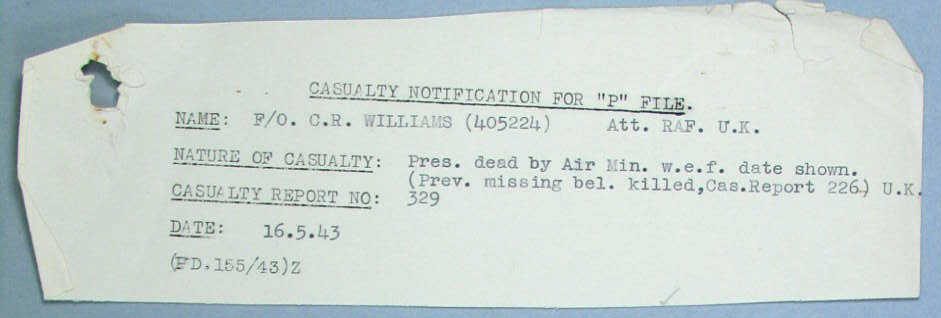
Williams file

The stark note on his personnel file confirms his death. [National Archives of Australia]
Thanks to Susan Paxton for help with this article.

More about Williams online:
Entry at Commonwealth War Graves Commission
Entry at Aircrew Remembered website
Casualty file on RAAFDB website

KIA 16.05.43

Rank and decorations as of 16 May 1943.
Sources:
Richard Morris, Guy Gibson, Penguin 1995
John Sweetman, The Dambusters Raid, Cassell 2002
Eric Fry, An Airman Far Away, Kangaroo Press 1993

The information above has been taken from the books and online sources listed above, and other online material. Apologies for any errors or omissions. Please add any corrections or links to further information in the comments section below.

Further information about Charlie Williams and the other 132 men who flew on the Dams Raid can be found in my book The Complete Dambusters, published by History Press in 2018.

Dambuster of the Day No. 66: Philip Burgess

Burgess lores

Flg Off P S Burgess
Navigator

Lancaster serial number: ED927/G

Call sign: AJ-E

Second wave. Crashed on outward flight.

Philip Sidney Burgess was born in Portsmouth on 19 September 1922, the son of Willis and Marie Burgess. Both his parents died when he was very young, so at the age of 4 he and his brother Carroll were adopted, but by different families. Philip was adopted by his aunt, Gertrude Lewis, in Folkestone, Kent. When she died in 1938, he was then adopted by the Rowland family in the same town. Carroll was adopted by the Brookes family. Philip Burgess was educated at the Harvey Grammar School in Folkestone.

He volunteered for the RAF soon after his 18th birthday, and undertook part of his training in Canada. He was commissioned in May 1942, and after further training was promoted to Flying Officer shortly before being posted to 61 Squadron in January 1943, a few months after he turned 20. Although he arrived with a crew in which he was the bomb aimer, he wanted to be a navigator. He then joined the crew captained by the New Zealander Ian Woodward, in which the wireless operator was Charlie Williams, starting life as its bomb aimer but then becoming its navigator. By the end of March when Woodward and Williams had completed their tours, Burgess had clocked up approximately seventeen operations. Both Burgess and Williams agreed to join the crew being put together by Norman Barlow which would transfer to 617 Squadron for the planned secret mission.

When they arrived in 617 Squadron there was a shortage of aircraft. This meant that crews could not be certain exactly when they would be training, nor of the route they would be instructed to undertake. However, if you were the navigator, like Burgess, it was sometimes possible to make minor variations during a session. Burgess explained how he had done this in a letter to his girlfriend, Edna Mitchell, on 15 April:

We came over Guildford last Sunday [11 April] at 4.30 p.m, just did a couple of circuits over the house – we couldn’t shoot the place up properly as we had a ‘Group Captain’ [Probably Gp Capt Charles Whitworth, Scampton’s station CO] on board as a passenger, and we weren’t supposed to be over Guildford anyway. We were supposed to go to Haslemere but I thought it would be better to go to the home town as it was so near. We are hoping to get down that way again in the near future and do a real shoot up of the place. [Letter in RAF Museum]

Despite the six weeks of low level training, Norman Barlow, Philip Burgess and the rest of the crew were all killed instantly when they hit a pylon just outside Haldern, Germany.

Yet to turn 21, Philip Burgess was probably the youngest officer to take part in the Dams Raid. He was buried with his comrades in Dusseldorf Cemetery, and reinterred after the war in Reichswald Forest Cemetery. His brother, Carrol Burgess, served in the Royal Engineers and survived the war.

Thanks to Susan Paxton and Alan Wells for help with the entries for all the Barlow crew.

More about Burgess online:
Entry at Commonwealth War Graves Commission
Entry at Aircrew Remembered website

KIA 16.05.43

Rank and decorations as of 16 May 1943.
Sources:
Richard Morris, Guy Gibson, Penguin 1995
John Sweetman, The Dambusters Raid, Cassell 2002
Eric Fry, An Airman Far Away, Kangaroo Press 1993

The information above has been taken from the books and online sources listed above, and other online material. Apologies for any errors or omissions. Please add any corrections or links to further information in the comments section below.

Further information about Philip Burgess and the other 132 men who flew on the Dams Raid can be found in my book The Complete Dambusters, published by History Press in 2018.

Dambuster of the Day No. 65: Leslie Whillis

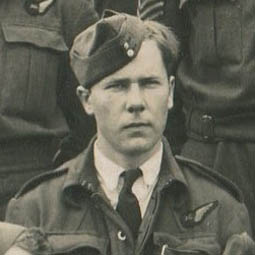
Whillis © PH lores

[Pic: P Humphries]

Plt Off S L Whillis
Flight engineer

Lancaster serial number: ED927/G

Call sign: AJ-E

Second wave. Crashed on outward flight.

Samuel Leslie Whillis, known as Leslie to his family, was born in Newcastle on Tyne in 1912, the second son of Charles and Edith Whillis. He worked as a commercial traveller before joining the RAF shortly after the outbreak of war, and served as ground crew until 1942. He then he took the opportunity to train as a flight engineer at the No 4 School of Technical Training at St Athans in Wales. Having qualified, he was then posted to 16 OTU, where it would seem that he first came across both Norman Barlow and Alan Gillespie. The three moved on to 1654 Conversion Flight, and then in September 1942 to 61 Squadron. All three flew their first operation over the Alps to Turin in Italy on 20 November 1942.

In January 1943, Whillis missed a few operations – perhaps because of illness – so by the time Barlow was at the end of his tour, he had only completed 22 operations. When he was offered the chance to move to a new squadron with Barlow, he must have thought that it was a good opportunity to complete his tour with a pilot with whom he had worked well.

Two days before the raid, both Whillis and Gillespie received commissions, backdated to April 1943. At this stage of the war, commissioned flight engineers were rare, so Whillis had obviously impressed his superiors.

Leslie Whillis married Gladys Cooper in Newcastle in 1941. His wife Gladys kept his medals, the letter from Gibson concerning his loss and various other mementoes. They were later sold at auction and are now on display in the Bygones gallery in Torquay.

Not much more than two hours after take off, Whillis and the rest of his ex-61 Squadron comrades crossed the Rhine, and then hit a pylon and crashed, killing all on board. Their bodies were taken to Dusseldorf North Cemetery, and reburied after the war in Reichswald Commonwealth War Cemetery.

Whillis’s wife Gladys kept his medals, the letter from Gibson concerning his loss and various other mementoes. They were later sold at auction and are now on display in the Bygones gallery in Torquay.

Whillis Bygones

[Pic: Bygones]

More about Whillis online:
Entry at Commonwealth War Graves Commission
Entry at Aircrew Remembered website
Auction of Whillis medals, 2000

KIA 16.05.43

Rank and decorations as of 16 May 1943.
Sources:
Richard Morris, Guy Gibson, Penguin 1995
John Sweetman, The Dambusters Raid, Cassell 2002
Eric Fry, An Airman Far Away, Kangaroo Press 1993

The information above has been taken from the books and online sources listed above, and other online material. Apologies for any errors or omissions. Please add any corrections or links to further information in the comments section below.

Further information about Leslie Whillis and the other 132 men who flew on the Dams Raid can be found in my book The Complete Dambusters, published by History Press in 2018.

Two Lancasters on show in UK this summer as Canada sends plane

640px-Lancaster_VR-A

Lancaster fans in Britain are in for a treat this summer as the Canadian ‘Mynarski’ Lancaster heads over to the UK in August. The Canadian Warplane Heritage Museum in Hamilton, Ontario revealed today that it plans to fly its vintage Avro Lancaster to England in August. Together with the Royal Air Force’s Battle of Britain Memorial Flight Lancaster, it will be involved in a month-long flying tour in the UK before returning home in September.
The Lancaster is scheduled to leave Canada on 4 August. The five-day transatlantic trip to England is being done in four to five-hour hops, with refuelling and rest stops in Goose Bay, Labrador; Narsarsuaq, Greenland; and Keflavik, Iceland. It will land in Coningsby, home of the BBMF, on 8 August and start a schedule of display flights in the UK on 14 August, flying out of Humberside Airport. According to the Canadian broadcaster, CBC:

The last time Lancasters flew together was 50 years ago over Toronto, at RCAF Station Downsview. The RCAF flew a special formation of three of the bombers in April 1964 to mark their retirement from service. The sight of two Lancasters flying in formation once more is a “once in a lifetime opportunity, something that will never happen again,” said Al Mickeloff, spokesman for the museum in Hamilton, which owns the Canadian Lancaster. “We don’t expect to ever do another trip like this.”
Hamilton’s WWII bomber, known as the Mynarski Memorial Lancaster, is an Avro Mk X built in 1945 at Victory Aircraft in Malton, Ont. Used to train air crews and later for coastal patrols and search-and-rescue work, it was retired in 1963. The museum bought it in 1977 for about $10,000 and a team of volunteers restored it and returned the plane to the air on Sept. 24, 1988.
Museum president and CEO David Rohrer said he and the RAF have talked about the possibility of bringing the planes together for more than a decade, but serious discussions started just a few months ago – partly because both groups wanted to do something to mark the 100th anniversary of WWI and 70th anniversary of D-Day this year.  The RAF wanted to arrange a formation flight before its own Lancaster is grounded next year for a planned overhaul. The Hamilton Lancaster was at a perfect point in its maintenance cycle to take on a trip like this, so the museum sent a planning team to the U.K. in January. “A window of opportunity was identified to bring the last two flying Lancasters in the world together in tribute to the crews who flew it, the people at Victory Aircraft who built it, and all the veterans of the war,” Rohrer told CBC News. “We always would have regretted it if we hadn’t tried our best to make this happen when the window presented itself.”
Mickeloff said big audiences are expected at appearances in the U.K., pointing out that the BBMF is a military plane and off-limits to the public, whereas the museum’s Lancaster is a flying exhibit that people can get up close to and even book a flight on. “We are going to give the general public that same access in the U.K. – access that they’ve never had to a Lancaster before. They’ll be able to get right up to it.” “It’s a real honour to be invited to fly with the Royal Air Force,” Rohrer added. “It’s a recognition of the confidence they have in the museum, and in the talent and dedication of the staff and volunteers, that they’re willing to be our host.”

The exact UK schedule will not be released for sometime, but you can bet the crowds will be enormous whenever the two aircraft make a joint appearance. Great news! [Hat tip: Paul Morley]

Dambuster of the Day No. 64: Norman Barlow

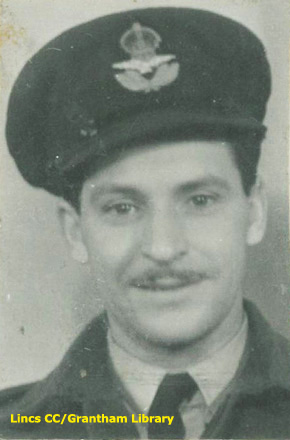
Barlow lores

Flt Lt R N G Barlow DFC
Pilot

Lancaster serial number: ED927/G

Call sign: AJ-E

Second wave. Crashed on outward flight.

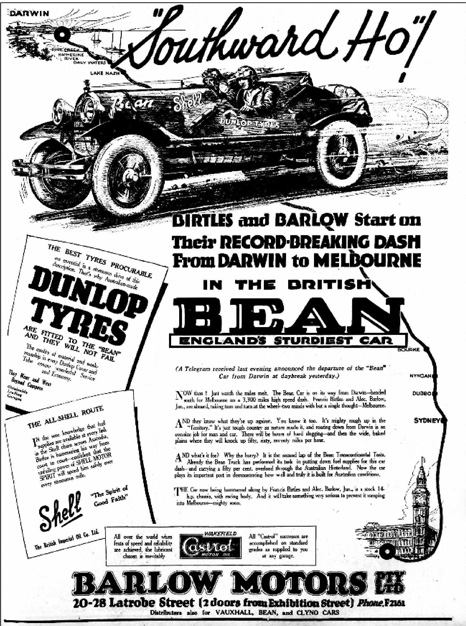
Robert Norman George Barlow was born on 22 April 1911 in Carlton, a suburb of the Australian city of Melbourne. He was always known by his middle name, Norman. The Barlows were a colourful family: Norman’s father Alec Barlow had built up a thriving motor business, Barlow Motors, which sponsored the adventurer Francis Birtles and Robert’s older brother Alec Jr in their record-breaking drive from Darwin to Melbourne in 1926. The pair covered the 5438km distance in 8 days and 13 hours. The car they drove, a Bean nicknamed ‘Sundowner’, is now in the National Museum of Australia.

The Argus, Saturday 23 October 1926, page 15

Barlow Motors newspaper advertisement, 1926. [Pic: Derham Groves]

The Barlow family houses, business premises and stables were all designed by the fashionable architect Arthur Purnell, with whom Alec Barlow Sr went into business. But many of his ventures were very close to the line and having defrauded a wealthy merchant of a large sum of money and forged Norman’s name on a loan document, Alec Sr committed suicide in 1937.

Norman Barlow had been working in the family business, but by the time he joined the RAAF he was running a garage. On his application form his occupation was given as ‘service station proprietor’. He had also qualified as a civilian pilot, so he had a head start in being chosen to carry on that role in the service.

Barlow married his second wife, Audrey, in 1940, shortly before joining up. He had an infant daughter named Adrienne born in 1938 from his first marriage, but she was living with his widowed mother. He left Australia for the last time in the autumn of 1941, sent to Canada for final training. He received his pilot’s flying badge in January 1942, and was also commissioned. By March he was in the UK, and posted to 16 Operational Training Unit for bomber training.

In September 1942, Barlow was posted as a Lancaster pilot to 61 Squadron, based at RAF Syerston and began a successful first tour of operations. His regular crew included flight engineer Leslie Whillis and bomb aimer Alan Gillespie, both of whom had been in his crew since they had met at 16 Operational Training Unit. Both would also later accompany him to 617 Squadron.

By March 1943, Barlow and his crew had completed a full tour, and he was recommended for the DFC. The citation read:

‘Throughout his many operational sorties, this officer has displayed the highest courage and devotion to duty. He has participated many attacks on Essen, Berlin, Hamburg and Cologne, and on two occasions he has flown his aircraft safely back to base on three engines. During periods of the most extensive operations Flt Lt Barlow has set a magnificent example of courage and determination.’ The award was confirmed in the London Gazette two days before the Dams Raid.

When the request for an experienced crew for the new squadron reached 61 Squadron, also based at RAF Syerston like Gibson’s 106 Squadron, there were a number of pilots and crews who would have fitted the request. It is not clear whether the Australian pilot Norman Barlow himself volunteered or was simply nominated by his CO, but he met all the criteria. He had just finished a full tour of operations and been recommended for a DFC. He was also apparently keen to move on to an immediate second tour, rather than taking the usual between-tours rest in an instructional role.

Barlow set about building a crew to accompany him. Two came from his own crew. His bomb aimer Alan Gillespie had also completed a full tour but he volunteered to carry on with his skipper. Flight engineer Leslie Whillis was near the end of his tour and must have thought that carrying on with Barlow gave him the chance to finish it with a pilot he trusted. The other four all had substantial experience. Charlie Williams and Philip Burgess had been flying with New Zealander Ian Woodward, who had also just finished his first tour. Williams, the wireless operator and another Australian, had also completed his tour. He wanted to go on with a second tour immediately, so he could go home to Queensland to be with his seriously ill father. Burgess, the navigator, had flown on eighteen operations, the majority with Woodward and Williams. The two gunners were the Canadian Harvey Glinz, who had flown on ten operations, and Jack Liddell, still a teenager but with a full tour under his belt.

Together, they were an unusual group. Three were in their 30s. Four were officers, with two more recommended for commissions which would come through before the Dams Raid. This left only the young Jack Liddell still a sergeant. They took the leave that was owing to them (probably without consulting their new CO) and didn’t arrive until the first week in April, so their training was delayed. Their first training flight was on Friday 9 April and the crew had the frightening experience of a bird strike, which resulted in a collision with the top of a tall tree. The flight engineer’s and bomb aimer’s canopies were smashed and two engines badly damaged. Barlow didn’t mention the incident when he wrote to his mother a few days later, but he did tell her about his crew:

‘I am now at a new Squadron that is just forming, hence we will not be operating for some weeks, you will be pleased to know, all we do is fly, fly and fly, getting plenty of training in. Today I flew for five hours with two other crews doing low level formation flying it was really good fun … I have practically a new crew now, you can hardly blame the boys for wanting a rest after all the trips we have done over there, so now I have four officers in my crew and two of the sergeants who have been with me all the time are getting their commissions so we will have six out of seven officers, I haven’t heard of that before. A chap doesn’t get a commission unless he knows his work, so you can guess we have a pretty good crew. I have an Australian in the crew, (Charlie Williams) a damn fine chap from the country, he is the W/Op. and we share a room together.’ [Letter to Frances Barlow, 13 April 1943, courtesy of Barlow family.]

Six weeks of intensive training followed, first by day and then later by night. Barlow’s last training flight was the day before the raid, on Saturday 15 May. With Vernon Byers as second pilot, they did another test bombing run over the range at Wainfleet.

Two days before the raid, Bill Astell had asked Barlow to witness his will. As a married man with a daughter, Barlow had written one already and left it behind in Australia.

The crew were probably nervous, but didn’t want to show it. In his last letter home, wireless operator Charlie Williams told his family that ‘[Barlow] is very thrilled today as he has just been awarded the D.F.C. [H]e is a very good pilot and I have every confidence that he will bring me through my second tour.’ In the same letter, Wiliams confirmed that both his and Barlow’s names had featured in a radio broadcast heard by his family at home. It is likely that this refers to something recorded during their time at 61 Squadron.

Barlow and his crew had been assigned to the Second Wave, detailed to attack the Sorpe Dam, and were due to take off one minute after Joe McCarthy. However McCarthy had a mechanical problem with one engine and had to decamp to the spare Lancaster, so Barlow’s AJ-E was the first Dams Raid aircraft in the air, leaving the ground at 2128.

Because they were under instruction to maintain radio silence, nothing more was heard from them. But we know that they reached the border between the Netherlands and Germany for it was near Haldern, 5km east of the Rhineside town of Rees, that they crashed, ten minutes before midnight. It appears that they hit one of the pylons which stretch across the fields in the locality, although it is possible that the aircraft had first been hit by flak. AJ-E came to rest in a small meadow on the edge of a copse. All on board were killed instantly, their bodies badly burned.

After the war, a witness, Johanna Effing, gave an account to the writer Herman Euler:

‘[We] saw the field in front of us blazing fiercely. An aircraft flying from the west had hit the top of a 100,000 volt electricity pylon and crashed into the field. A huge bomb had rolled out 50 metres from where the plane had crashed. Even before it got light we had a whole crowd of inquisitive people there despite the danger from exploding ammunition. It was not long before the Mayor of Haldern, Herr Lehmann, was on the scene and he climbed onto what was taken to be a large petrol canister. He said ‘I’ll tell the Chief Administrative Officer that he needn’t send us any more petrol coupons for the rest of the war. We’ve got enough fuel in this tank.’ When he found out later that he had been standing on dynamite he’s supposed to have felt quite sick. All the crew were killed and burnt beyond recognition. There were no flak batteries or searchlights here; the plane was just flying too low. The first guards from the scene of the crash came to the house and showed us the valuables which they had found: things like cases, gold rings, watches and a long cylindrical torch. Its owner had scratched all his missions on it – 32 of them. I still remember the name ‘Palermo’ and also the names of a lot of other towns.’
Herman Euler, The Dams Raid Through the Lens, After the Battle, 2001, p.93

The unexploded mine was defused by one of Germany’s leading bomb disposal officers, Hauptmann Heinz Schweizer and taken to Kalkum, near Dusseldorf, for examination. Detailed drawings of the whole construction were quickly made, and the fact that the bomb had been spun before release was deduced (although it is not certain whether they ever worked out that it had in fact been spun backwards).

Rollbombe 17051943 Absturz Haldern

Local dignitaries took turns to pose with what was at first thought to be a petrol tank.

Norman Barlow and his colleagues were all buried in the North Cemetery in Dusseldorf. But it took several months for news of their fate to reach the British authorities and then to be transmitted onto their counterparts in Australia. At this stage, Alec Barlow Jr was also a pilot serving in the RAAF, commanding a training school, and was quick to use his connections to see if he could find further information.

Barlow file

The bleak note made on Barlow’s personnel file concerning his death [National Archives of Australia]

After the war, Norman Barlow and his crew were reinterred in Reichswald Forest War Cemetery. Alec Barlow Jr had a long career with Qantas, and died in 1972.

The site near Haldern where AJ-E came down is now marked with a memorial erected by the local history society, co-ordinated by historian Volker Schürmann.

More about Barlow online:
Entry at Commonwealth War Graves Commission
RAAFDB website, use search engine for link to personnel file and casualty record
Entry at Aircrew Remembered website
University of Melbourne Collections, article about Barlow family

KIA 16.05.43

Rank and decorations as of 16 May 1943.
Sources:
Richard Morris, Guy Gibson, Penguin 1995
John Sweetman, The Dambusters Raid, Cassell 2002
Eric Fry, An Airman Far Away, Kangaroo Press 1993

The information above has been taken from the books and online sources listed above, and other online material. Apologies for any errors or omissions. Please add any corrections or links to further information in the comments section below.
Further information about Norman Barlow and the other 132 men who flew on the Dams Raid can be found in my book The Complete Dambusters, published by History Press in 2018.

Dambuster of the Day No. 63: Henry O’Brien

O'Brien IWM detail

Harry O’Brien in 617 Squadron, July 1943

Sgt H E O’Brien
Rear gunner

Lancaster serial number: ED912/G

Call sign: AJ-N

First wave. Third aircraft to attack Eder Dam. Mine dropped accurately causing final breach.

Henry Earl O’Brien, known as Harry, was born in Regina, Saskatchewan, Canada on 15 August 1922. He volunteered for the RCAF soon after he turned 18, and was selected for gunnery training. On arriving in the UK and further training, he crewed up with Les Knight and the rest of his colleagues, and they were all posted to 50 Squadron at the same time. He flew on 23 operations with Knight between September 1942 and March 1943.

Like his colleagues, O’Brien hugely admired his pilot. Knight was ‘the coolest and quickest thinking person I have ever met. And, in my opinion, the most knowledgeable person on the squadron with respect to his job.’

O’Brien weighed about 210lb, and was too big for the harness to which his parachute should have been clipped while he was in his turret. According to Fred Sutherland, his fellow Canadian, the pair had a reputation for being the sloppiest guys on the squadron. In fact, they were actually very disciplined and never reported unfit for duty.

On the Dams Raid, jammed into his position in AJ-N’s rear turret, O’Brien noticed how bright the moonlight made the landscape, and could see farmhouses, rivers, canals and even individual people on the ground.

By the time they got to the Eder, the crews were aware of its extreme difficulty and the fact that the dawn was not too far away. O’Brien was one of those who heard Henry Maudslay’s final words on the radio to Gibson, and noted that his voice sounded faint, unnatural and almost dehumanised. This made him quite nervous during the run in towards the dam that the mine, when dropped, might explode under the aircraft like it had done for Maudslay.

However it didn’t. It bounced perfectly, a testament to Knight’s skill at lining up the tricky approach. To his joy O’Brien had what he described as a ‘front centre’ view of the dam’s destruction: ‘our aircraft was standing on its tail for the climb out… Simultaneously the dam broke and a column of water rose vertically behind us.’ It was a feeling of exquisite pleasure that they had broken the dam, he recalled.

There was one almost fatal moment to come on the way home. As they crossed the Dutch wall defences, Knight came within a few feet of hitting a giant concrete block, but it was only O’Brien who saw just how close they got to it.

Four months later, on their final flight together, O’Brien was one of the two crew members who were captured after baling out over Holland. He spent the rest of the war as a PoW, and returned to Canada after his release.

Harry O’Brien and his wife Marlene had eight children, the first of whom was called Leslie in honour of his pilot, Les Knight. He died on 14 September 1985 in Edmonton, Alberta.

Survived war.

Rank and decorations as of 16 May 1943.
Sources:
Richard Morris, Guy Gibson, Penguin 1995
John Sweetman, The Dambusters Raid, Cassell 2002
John Sweetman, David Coward and Gary Johnstone, Dambusters, TimeWarner 2003

The information above has been taken from the books and online sources listed above, and other online material. Apologies for any errors or omissions. Please add any corrections or links to further information in the comments section below.

Further information about Harry O’Brien and the other 132 men who flew on the Dams Raid can be found in my book The Complete Dambusters, published by History Press in 2018.

Dambuster of the Day No. 62: Frederick Sutherland

Sutherland IWM detail

Fred Sutherland in 617 Squadron, July 1943

Sgt F E Sutherland
Front gunner

Lancaster serial number: ED912/G

Call sign: AJ-N

First wave. Third aircraft to attack Eder Dam. Mine dropped accurately causing final breach.

Frederick Edwin Sutherland was born in Peace River, Alberta, Canada on 26 February 1923, the only boy in a family of the three children of Dr Frederick Henry Sutherland and his wife, Clara. His father was a doctor and his mother was a nurse. From a young age, he had wanted to fly and had dreams of becoming a bush pilot, but the war put paid to that. So he joined the RCAF in 1941, as soon as he turned 18. After initial training he volunteered for air gunner duties.

He arrived in England in 1942, and crewed up with Les Knight and his future colleagues at a training unit before they were all posted to 50 Squadron in September of that year. He flew on 25 operations with Knight before the whole crew volunteered to transfer to the new 617 Squadron in March 1943.

Like most of the squadron he had no idea what the target was to be until he walked into the briefing room hours before take off on 16 May 1943. When he saw the scale model of the Möhne Dam, the first thing he noticed were the 20-millimetre gun posts at either end of the dam. ‘I immediately thought we didn’t have a hope,’ he said recently.

After the Möhne was breached and the crew moved on to the Eder, he realised how difficult the attack was going to be:

We were all afraid of the hill. We had to drop the bomb at the right distance and the right height, and then to make it [Les] had to push the throttles right through the gate, which is not supposed to be done… I didn’t see anything when the bomb went off because I was in the nose, but I heard the rear gunner saying ‘it’s gone, it’s gone’.

After the raid, Les Knight, Sidney Hobday and Johnny Johnson were decorated. Knight was embarrassed that the whole crew had not been rewarded, Sutherland recalled. ‘He felt badly that half the crew got decorated, the other half didn’t. He said you know I’m wearing the DSO for all you guys, you all did something for it.’

On the fateful Dortmund Ems raid in September, Knight’s crew were in the formation of four aircraft led by the new squadron CO, George Holden. As they flew over the small town of Nordhorn in Holland, Holden was hit by flak, and his aircraft exploded. On board were four of Gibson’s Dams Raid crew, including fellow Canadians, Terry Taerum and George Deering. Sutherland in the front turret saw everything:

It was so close I could almost reach out and touch it. Your friends are getting killed and you are scared as hell but you can’t let it bother you because if you did, you could never do your job. All you can do is think, ‘Thank God it wasn’t us.’

Hours later, Sutherland was himself on Dutch soil, having parachuted to safety after being ordered by Knight to bale out. After being hidden by a friendly Dutch farmer, he was put in touch with the underground network, and met up with Sydney Hobday. The two were smuggled all the way through Belgium and France to Spain.

At one point while on a train, using forged documents provided to him by the underground, he duped a German officer who inspected his fake passport. Suspicious, the officer held the passport up to the light and scrutinized it painstakingly, trying to determine if it was forged. ‘I had to ball up my fists to keep him from seeing how much my hands were shaking,’ he recalled.

After getting back to the UK he was sent home to Canada in 1944. Greeted in Edmonton by his girlfriend, Margaret Baker, he proposed immediately. Terry Taerum’s mother found out that he had been posted back to Canada, and asked to meet him. She wanted to know whether her son had any chance of escaping the blaze when his aircraft was hit. ‘Telling her about it was the hardest thing I ever had to do,’ he said recently.

Following the war, Sutherland stayed on in the RCAF for 12 more years, and was commissioned. He then studied forestry, and got a job with the forestry service. In 1964 he became forestry superintendent in Rocky Mountain House in his home province of Alberta, and he still lives in the area.

Fred Sutherland used the famous Chemin de la Liberté route in his escape through the Pyrenees, and in 2010, he paid a return visit to the area and met the people who keep the memories of the route alive.

Fred S. + Jo Salter

Fred Sutherland in 2010 on his return visit to the Chemin de la Liberté route, photographed with Jo Salter, the first woman to fly as a combat pilot with the RAF, and a fellow 617 Squadron veteran. [Pic: Scott Goodall]

More about Sutherland online:
Blog article and interview by Elinor Florence, 2015
Interview on CBC, May 2013
Interview and article, Edmonton Journal, Canada, November 2013
BBC Radio documentaries about the Chemin de la Liberté

Survived war.

Rank and decorations as of 16 May 1943.
Sources:
Richard Morris, Guy Gibson, Penguin 1995
John Sweetman, The Dambusters Raid, Cassell 2002
John Sweetman, David Coward and Gary Johnstone, The Dambusters, TimeWarner, 2003

The information above has been taken from the books and online sources listed above, and other online material. Apologies for any errors or omissions. Please add any corrections or links to further information in the comments section below.

Further information about Fred Sutherland and the other 132 men who flew on the Dams Raid can be found in my book The Complete Dambusters, published by History Press in 2018.
New Forest to yield up Slam secrets

794px-Lancaster_617_Sqn_RAF_dropping_Grand_Slam_bomb_on_Arnsberg_viaduct_1945

A Grand Slam being released by 617 Squadron’s Flg Off Phil Martin on 19 March 1945, in the successful attack on the Arnsberg Viaduct. [IWM CH 15375/Wikipedia] 

617 Squadron’s reputation as the RAF’s crack bomber squadron was cemented towards the end of the war when it was chosen to drop the first ‘Grand Slam’ bomb. This was the biggest conventional bomb used during the war, and weighed in at 22,000 lbs. It had been designed by Barnes Wallis to create an ‘earthquake’ effect which would destroy buildings or structures in the area without necessarily hitting them directly.
On the morning of 13 March 1945 the Grand Slam was tested at the same New Forest bombing range which had been used in the summer of 1943 to see whether the ‘bouncing bomb’ used on the Dams Raid would be effective when dropped on land. (In fact, it caused a trail of debris to be thrown up which would damage low-flying aircraft, so it was never used.) The Grand Slam test drop, on the other hand, was very successful, leaving a crater 70 feet deep and 130 feet in diameter.
That afternoon at Woodhall Spa, two specially adapted 617 Squadron Lancasters were loaded with Grand Slams and a further 18 with the 10,000 lb Tallboys, and set off for the Bielefeld Viaduct, an important railway target which had withstood several earlier attempts to destroy it. The two Grand Slams were in aircraft piloted by 617 Sqn CO Group Capt Johnny Fauquier and flight commander Sqn Ldr Charles (‘Jock’) Calder. However, when they reached the target it was completely enveloped in cloud, so bombing was impossible. The squadron returned to base, although as a precaution, given their huge load, Fauquier and Calder landed at the emergency landing strip at Carnaby with its much longer runway.
The next day, Fauquier and Calder’s aircraft were reloaded with Grand Slams, ready for another operation against the same target. Fourteen Lancasters were loaded with Tallboys. When Fauquier’s aircraft developed a mechanical fault before take off he jumped out and ran towards Calder. Calder guessed correctly that his aircraft might be commandeered by his superior officer and ignored the gesticulations from the runway.
Calder dropped his Grand Slam at the viaduct at 1628. Witnesses described it as looking something like a telegraph pole as it fell, and that it was considerably bigger than anything that had been seen before. The airborne shockwave was felt 3km away. When combined with the effect of the Tallboys dropped around the same time, the effect was as awesome as Wallis had predicted and five arches on the viaduct were destroyed.
The damage done in the test drop in the New Forest is now being investigated by archaeologists for the first time since the war, according to a recent report in The Independent:

The New Forest National Park Authority’s current geophysical survey and historical investigation into Grand Slam is part of a wider project researching and surveying the park’s often unappreciated wartime role. Quite apart from Grand Slam, the New Forest was used as a test site for the first Barnes Wallis bouncing bombs, the development of the ‘Tallboy’ predecessor of Grand Slam, as well as early demonstrations of the Churchill tank. The forest was also home to nine wartime airfields, many of which played a key role in D-Day.

41 more Grand Slams were dropped between 13 March 1945 and the end of the war. If they had been available earlier in the war, by how much would it have been foreshortened?
Jock Calder was one of 617 Squadron’s most distinguished pilots in the last few months of the war. He died in 1997.

[Hat tip: Graeme Stevenson]