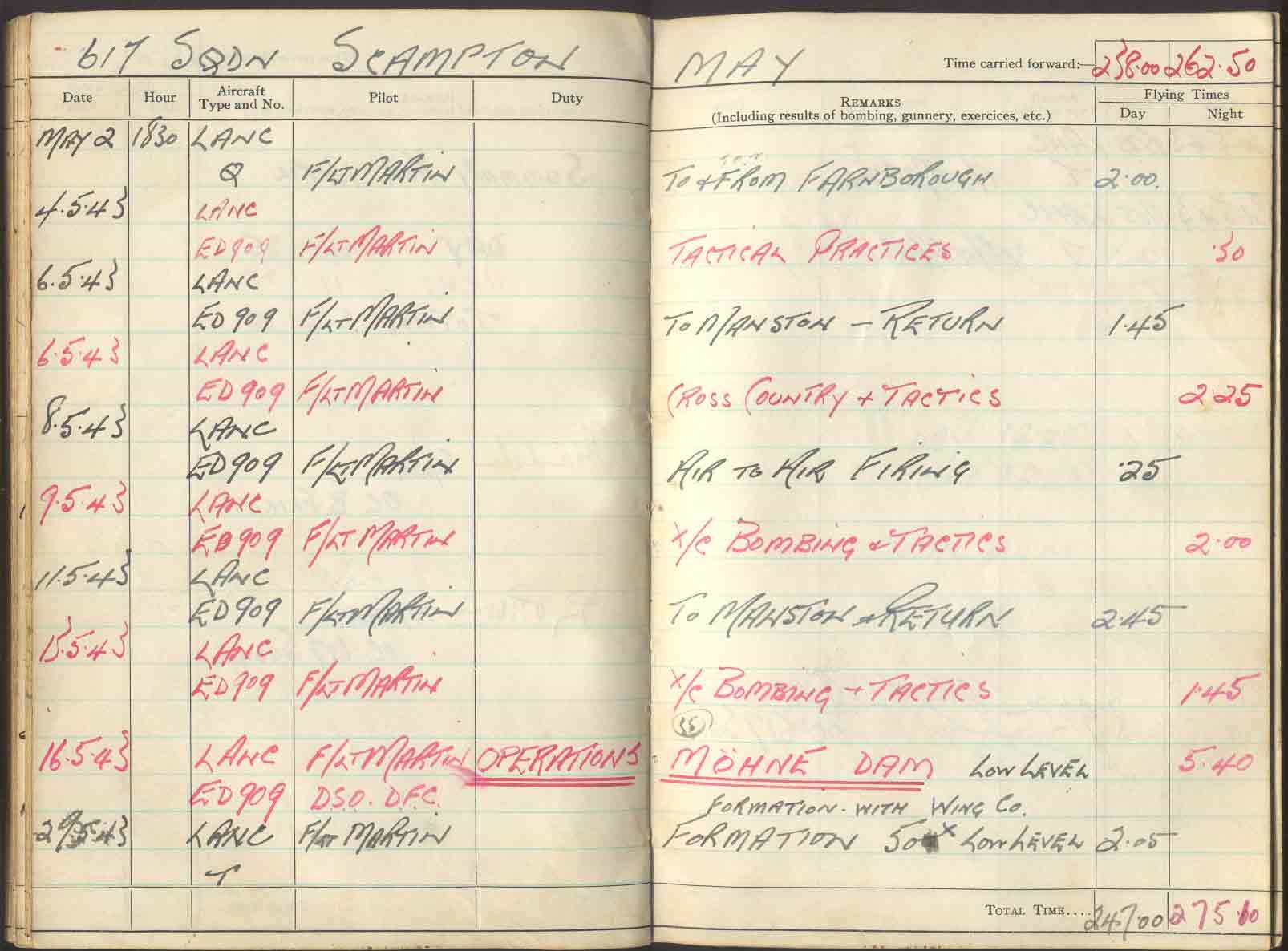
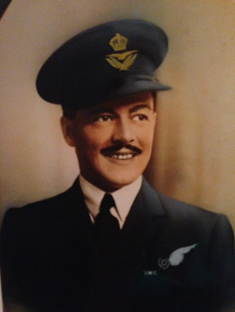
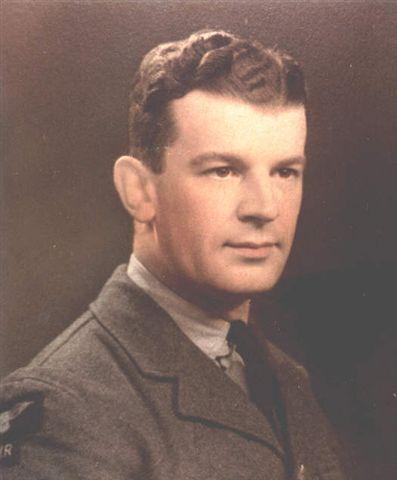
Dambuster of the Day No. 26: Vincent MacCausland

MacCausland_1

Flg Off V S MacCausland
Bomb aimer
Lancaster serial number: ED887/G
Call sign: AJ-A
First wave. Fourth aircraft to attack Möhne Dam. Mine dropped accurately, causing small breach. Aircraft shot down on return flight.

Vincent Sanford MacCausland was born in Tyne Valley, Prince Edward Island, Canada on 1 February 1913. He was the oldest of the five children of Burns and Edith MacCausland and worked as a teacher before joining the RCAF in 1940. After training as an observer and then a bomb aimer he completed a first tour in 57 Squadron in late 1941. He received a commission and then spent more than a year in a training unit as an instructor. Keen to get back to a second tour, which was well overdue, he returned to 57 Squadron in March 1943. His return roughly coincided with the arrival of the inexperienced crew skippered by Melvin Young.

When it was decided that Young’s bomb aimer was not suitable for the mission being planned. MacCausland fitted the bill for a replacement. Already at Scampton, with a tour under his belt and further experience training other bomb aimers he could be expected to slot in easily, and he was therefore drafted into Young’s crew on 14 April 1943.

In a letter home just after he had been posted into 617 Squadron he told his mother what had happened:

You are perhaps wondering what I am doing here. There is really no need to feel over anxious to know that I am back again for my second tour. I really was due back six months after Sept of 41 and had the privilege of joining a well experienced crew and on aircraft that one dreams about. To tell you the honest truth I would not have taken this on had I believed it was a doubtful move. I came up here a couple of days ago (Apr 14th) and we are on revision and conversion for the next month before going over with a few bundles for the squareheads I know that you will be feeling most anxious during those few months ahead but the time will soon pass and I know that God will be especially with us as were blessed in that first tour. I hope that we shall be writing at least two to three times per week and if you do the same, it will be much happier for us all.

Sadly, the blessings that were bestowed on him in his first tour would not follow him to his second. MacCausland delivered a perfectly placed mine as Young’s aircraft flew at the Möhne Dam, and it bounced several times, exploded at the base and caused the initial small breach.

AJ-A was shot down at the last moment of danger shortly after they had passed over the Dutch coast. Vincent MacCausland’s body was washed ashore on 27 May 1943, along with those of Lawrence Nichols and Gordon Yeo. They were all buried in Bergen General Cemetery.

MacCausland had a girlfriend in Bedford, Rene Warman, and they had a daughter, Angela, born in Bedford in January 1943. Rene Warman made contact with the MacCausland family after he was killed and travelled out to Canada after the war with her daughter to meet them. She would later marry Vincent MacCausland’s brother, Howatt. The marriage did not last, and Rene and Angela returned to England.

More about MacCausland online:
His letters in the Canadian Letters and Images Project
Flickr collection by Joel Joy
Article in the PEI Guardian, including interview with his sister
Commonwealth War Graves Commission

KIA 17 May 1943.

Rank and decorations as of 16 May 1943.
Sources: Arthur Thorning, The Dambuster who Cracked the Dam, Pen and Sword 2008
Richard Morris, Guy Gibson, Penguin 1995
John Sweetman, The Dambusters Raid, Cassel 2002
Further information about Vincent MacCausland and the other 132 men who flew on the Dams Raid can be found in my book The Complete Dambusters, published by History Press in 2018.

David Maltby’s last flight: possible Mosquito collision

Blida lo res CNV00005

Sqn Ldr David Maltby and his Dams Raid crew, pictured in August 1943, at RAF Blida North Africa. Sadly, they were all killed over the North Sea a month later. Standing L-R: Victor Hill, Antony Stone, John Fort, David Maltby, William Hatton, Harold Simmonds. In front: Vivian Nicholson. [Pic: Grace Blackburn]

Today’s Sunday Express contains a two page feature about the last flight of Sqn Ldr David Maltby and his crew, on 14/15 September 1943, almost exactly four months after the Dams Raid. This was an attack on the Dortmund Ems canal, which was called off when weather conditions over the target were found to have deterioriated. As Maltby turned the aircraft back towards base, some sort of explosion occurred and it crashed into the sea with the loss of everyone on board.
What caused the explosion has been the subject of some speculation over many years. When researching my book, Breaking the Dams, I came across some documents in the National Archives which indicate that the crash may have occurred because of a collision with a Mosquito on another raid, out of radio contact and also returning to base. The Mosquito was from 139 Squadron, and was piloted by Flt Lt Maule Colledge. he full story is told in my book, and in abbreviated form on my other website, breakingthedams.com.

Dambuster of the Day No. 25: Lawrence Nichols

LawrenceNichols

Sgt L W Nichols
Wireless operator
Lancaster serial number: ED887/G
Call sign: AJ-A
First wave. Fourth aircraft to attack Möhne Dam. Mine dropped accurately, causing small breach. Aircraft shot down on return flight.

Lawrence William Nichols was born in Northwood, Middlesex on 17 May 1910, and therefore died early in the morning of his 33rd birthday.
Nichols was the oldest of the four children of Edward and Florence Nichols. Edward Nichols was a coal merchant. Lawrence Nichols had married his wife Georgina in 1933, and they had two children. He had worked as a haberdasher in Oxford Street and then as manager of a branch of Currys in North Harrow before volunteering for the RAF in 1940.
After qualifying as a wireless operator/air gunner he then crewed up with Charles Roberts and John Beesley in 10 Operational Training Unit at RAF Abingdon in July 1942, in a crew skippered by Graham Bower. On 13 September, Nichols went on his first operation, flying with Bower on a raid on Bremen.
The crew moved on to 1660 Conversion Unit later that year. On 16 January 1943 , after Bower’s departure, he went on his second operation, to Berlin with Vincent Duxbury as pilot. Melvin Young joined the Conversion Unit later, in early March and took over this new crew there. The full crew were then transferred to 57 Squadron at Scampton on 13 March. On 25 March, they were all reposted to the new 617 Squadron.
Nichols was a horse racing enthusiast and had plans to set up as a bookmaker after the war, with financial help from his brother Horace, who was running the family coal business. On 5 May 1943, he wrote to his other brother Gerry, who was serving in the army in India, about their plans: ‘There is no opposition at all in Northwood and I think it would do very well … after all we are very well known and should get plenty of clients.’ He went on to describe to Gerry how he and Horace had cycled over to Windsor to the Easter Monday race meeting. They both backed five winners and also got a successful tip for a race at Pontefract, where they made yet more money.
His colleague, front gunner Gordon Yeo, knew well about his betting skills. He told his parents in a letter sent shortly before the crews took off on the raid that ‘Larry (Nichols) our Wireless Operator went to Windsor races last Saturday (1st May) [sic] and won about £12, but he was born lucky.’ Maybe he was, but sadly his luck ran out when he died along with the rest of the crew when they were shot down by a gun battery at Castricum-aan-Zee.
Lawrence Nichols’s body was washed ashore on 27 May 1943, along with those of Vincent MacCausland and Gordon Yeo. They were all buried in Bergen General Cemetery.

More about Nichols online:
Commonwealth War Graves Commission
Undated newspaper article
Entry on bombercrew.com

KIA 17 May 1943.

Rank and decorations as of 16 May 1943.
Sources: Arthur Thorning, The Dambuster who Cracked the Dam, Pen and Sword 2008
Richard Morris, Guy Gibson, Penguin 1995
John Sweetman, The Dambusters Raid, Cassel 2002

Further information about Lawrence Nichols and the other 132 men who flew on the Dams Raid can be found in my book The Complete Dambusters, published by History Press in 2018.

Dambuster of the Day No. 24: Charles Roberts

Flt Sgt C W Roberts
Navigator
Lancaster serial number: ED887/G
Call sign: AJ-A
First wave. Fourth aircraft to attack Möhne Dam. Mine dropped accurately, causing small breach. Aircraft shot down on return flight.

Charles Walpole Roberts was born on 19 January 1921 in Northrepps, a village near Cromer in Norfolk. He was the only son of Charles Augustus and Dorcas Roberts. Their marriage broke down when he was very young, and his father moved to Devon. Roberts was brought up by his mother and grandmother, educated at the village school before entering the nearby Paston School, famous as the alma mater of Lord Nelson.
Roberts enrolled in the RAF in 1940, and was selected for training as a pilot. He was sent out to Rhodesia for training at an Elementary Flying Training School. Like many would-be pilots, he ended up qualifying as a navigator.
He then crewed up with Lawrence Nichols and John Beesley in 10 Operational Training Unit at RAF Abingdon in July 1942. The crew was skippered by Graham Bower. On 10 and 13 September, Roberts flew on two operations with Bower, trips to Düsseldorf and Bremen. The crew moved on to 1660 Conversion Unit later that year. Although the crew took part in a raid on Berlin on 16 January 1943, after Bower’s departure, Roberts was replaced as navigator by an instructor, Flt Lt V. Blair. Melvin Young joined the Conversion Unit later, in early March, and took over the old Bower crew there.
The full crew were then transferred to 57 Squadron at Scampton on 13 March. On 25 March, they were all reposted to the new 617 Squadron.
Roberts was one of the most inexperienced navigators to fly on the Dams Raid, but he acquitted himself well on the flight to the Möhne Dam, as the trio of Young, Maltby and Shannon maintained formation throughout the trip. Roberts was engaged to Irene Mountney, a WAAF who worked at Scampton packing parachutes.
AJ-A was shot down at the last moment of danger shortly after they had passed over the Dutch coast. On 19 May, Charles Roberts’s body was the first of those of the crew of AJ-A to be washed ashore, and he was buried two days later in Bergen General Cemetery.

More about Roberts online:
Commonwealth War Graves Commission

KIA 17 May 1943.

Rank and decorations as of 16 May 1943.
Sources: Arthur Thorning, The Dambuster who Cracked the Dam, Pen and Sword 2008
Richard Morris, Guy Gibson, Penguin 1995
John Sweetman, The Dambusters Raid, Cassel 2002

Further information about Charles Roberts and the other 132 men who flew on the Dams Raid can be found in my book The Complete Dambusters, published by History Press in 2018.
Flyover at Derwent goes ahead, but restricted access

Dams Raid 70th anniversary

The BBMF has at last announced that there will be a Lancaster flyover at Derwent Reservoir (the Ladybower Dam) on Thursday 16 May between 1300 and 1315. However, access will be severely restricted – no tickets are being issued, parking is severely limited, and the roads will be closed if they become overly busy. See here for full details. The Lancaster flyover will be followed by modern day Tornadoes from 617 Squadron.
The aircraft, which are expected to comprise the Lancaster, a Spitfire and a Hurricane (although this is not specified), will then fly on to Chatsworth at 1320 where, the RAF is keen to tell you, there is plenty of parking (costing £3 per vehicle) and opportunity to take pictures. This may well be the better option unless you are willing to spend a lot of time either hiking cross country to the dam or waiting in very long traffic queues.
More details about other Dambusters 70th anniversary events will be posted here tomorrow.

Dambuster of the Day No. 23: David Horsfall


Pic: Humphries Collection

Sgt D T Horsfall
Flight engineer
Lancaster serial number: ED887/G
Call sign: AJ-A
First wave. Fourth aircraft to attack Möhne Dam. Mine dropped accurately, causing small breach. Aircraft shot down on return flight.

David Taylor Horsfall was born in Bramley, Yorkshire on 16 April 1920, the older of the two sons of Robinson and Emma Horsfall. The family moved to Barnsley, and both he and his brother Albert went to Barnsley Grammar School. David joined the RAF in 1936 as a boy entrant at the No 1 School of Technical Training at RAF Halton. He served in ground crew until 1942.

He then took the opportunity to retrain as a flight engineer on heavy bombers, and met up with his future crew at 1660 Conversion Unit at RAF Swinderby in late 1942. The crew was left pilotless when its skipper Sgt Graham Bower went sick on 14 January 1943. so Horsfall’s first operation was to the difficult destination of Berlin on 16 January along with colleagues, Lawrence Nichols, Gordon Yeo and Wilfred Ibbotson, in a Lancaster piloted by Plt Off Vincent Duxbury, an instructor. He flew on a second operation to Berlin the following day, with Flg Off Harold Southgate as pilot, returning on three engines after one failed on the way home.

Melvin Young joined the Conversion Unit later, in early March and took over this new crew there. The full crew were then transferred to 57 Squadron at Scampton on 13 March. On 25 March, they were all reposted to the new 617 Squadron.

The Dams Raid was therefore Horsfall’s third operation, and one that they would all have thought had gone well, until they were caught by a burst of flak at the very last moment of real danger.
David Horsfall’s body was washed ashore on 29 May, along with his skipper. They were buried together in Bergen General Cemetery.

David Horsfall had a brother, Albert, who had been killed in 1940 serving as a navigator in 50 Squadron. The Horsfall family therefore share an unwanted sad distinction amongst Dambuster families with the Taerums and the Minchins, in that they all had two sons killed on active air force service during the war.

More about Horsfall online:
Commonwealth War Graves Commission

KIA 17 May 1943.

Rank and decorations as of 16 May 1943.
Sources: Arthur Thorning, The Dambuster who Cracked the Dam, Pen and Sword 2008
Richard Morris, Guy Gibson, Penguin 1995
John Sweetman, The Dambusters Raid, Cassel 2002

Further information about David Horsfall and the other 132 men who flew on the Dams Raid can be found in my book The Complete Dambusters, published by History Press in 2018.

Dambuster of the Day No. 22: Melvin Young

Young colour

Sqn Ldr H M Young DFC & Bar
Pilot
Lancaster serial number: ED887/G
Call sign: AJ-A
First wave. Fourth aircraft to attack Möhne Dam. Mine dropped accurately, causing small breach. Aircraft shot down on return flight.

Henry Melvin Young was born in Belgravia, London, on 20 May 1915. His father was a solicitor, although he was serving in the army at the time of his birth. His mother was American, from a wealthy Californian family involved in the real estate business. He had a somewhat disjointed upbringing, spending several years in the USA during his schooldays. He spent two years at Kent School in Connecticut before leaving at the age of 17 to spend a year at Westminster School in London. He then went up to Trinity College, Oxford to study law. He had taken up rowing at school and carried on at Oxford, gaining a Blue for rowing for the university in the 1938 Boat Race. (A rowing contemporary at Trinity College was Richard Hillary, later to gain wartime fame as a fighter pilot and the author of The Last Enemy.)

Young joined the Oxford University Air Squadron and qualified as a pilot. Another student member was Leonard Cheshire, and Young’s instructor was Charles Whitworth, then an RAF Flight Lieutenant, and later to become station CO at Scampton at the time of the Dams Raid. Whitworth was fairly critical of Young’s abilities, describing him as ‘not a natural pilot’ although noting that he had ‘improved considerably’ and ‘was very keen and has plenty of common sense’.

Young joined the RAFVR in September 1938 and when war came a year later began formal training to be a service pilot. During this period he wrote to the headmaster of his old school in Connecticut, in terms which are expressed very similarly to those of his Oxford contemporary, Richard Hillary:

Since we had to have a war, I am more than ever glad that I am in the air force … though I haven’t yet had to face any of the conflict and killing of war, I am not frightened of dying if that is God’s will and only hope that I may die doing my duty as I should. In the meantime, I remain as cheerful, I think, as ever and try to keep others so.

Young’s first operational posting in June 1940 was to 102 Squadron, flying Whitleys. Some of their bombing operations took them as far as Turin in north Italy. It was during this tour that his ‘ditchings’ took place. The first was on 7 October 1940 when he and his crew spent twenty-two hours in a dinghy in the Atlantic, while on convoy escort duty. The second was on 23 November 1940 in the English Channel south of Plymouth. He finished his tour in February 1941, and was awarded the DFC.

In September 1941, after a spell at a training unit, Young was promoted to Squadron Leader and started a second tour with 104 Squadron on Wellingtons. A detachment of fifteen aircraft and crews from 104 Squadron was then sent to Malta and then on to Egypt. There he completed another tour, and received a Bar to his DFC.

In July 1942, he was posted to the RAF Delegation in Washington DC. While he was in the USA, he got married to his American girlfriend, Priscilla Rawson. However, he had to leave his new wife behind when he was posted back to England in February 1943. He was sent to 1660 Conversion Unit at RAF Swinderby to begin training on the heavy bomber, the Lancaster, which had come into service in his absence. He began training on 1 March 1943 and it was at this point he was allocated the crew with which he would fly on the Dams Raid. The crew had been without a pilot since their skipper had been sent on sick leave in January. Young first flew a training flight with his new crew on about 4 March, and undertook some fifteen more in the next seven days.
On 13 March they were all posted to 57 Squadron at Scampton, with Young being given command of its new C Flight. Four existing 57 Squadron crews – those captained by Flt Lt Bill Astell, Plt Off Geoff Rice, Sgt George Lancaster and Sgt Ray Lovell – were moved into the new flight.

In the normal course of events, this C Flight would have been built up further, but this was not to be. Within a few days, all five crews in the flight were transferred into a new squadron being established alongside 57 Squadron on the same station.

None of these crews were personally selected by Guy Gibson. But because Young was an experienced pilot with a DFC and Bar and already on the station, it must have been logical for someone at 5 Group HQ to suggest that he and the rest of his flight simply transfer in. Perhaps Young’s old flying instructor Charles Whitworth, the station commander at Scampton, had a hand in this. In the event, only three of the crews – those skippered by Young, Astell and Rice – finally flew on the Dams Raid.

Young’s seniority and administrative skills made him the obvious choice to be a flight commander, and it fell to him and his fellow flight commander Henry Maudslay to do a lot of the necessary organising to get more than twenty crews ready for such an important mission. He was popular amongst his fellow officers, with his prowess at beer drinking and eccentric habit of sitting cross-legged on either a desk or the floor much admired. This popularity may have led to his nickname of Dinghy being chosen as the code word to signify a successful attack on the Eder Dam.

On the raid, Young led the second formation in Lancaster AJ-A, the other two being piloted by David Maltby and David Shannon. This trio arrived at the Möhne Dam just a couple of minutes before Gibson began the first attack. By the time Young’s turn came, a certain amount of desperation must have been creeping in. Gibson and Martin’s mines had not been successful and Hopgood had been shot down.

Young’s perfect run resulted in a small breach in the dam wall. This only became obvious ten minutes later when David Maltby, following up with the next mine, saw that the crest of the dam was crumbling. The two explosions combined caused the final collapse. Young was then instructed to go with Gibson to oversee the assault on the Eder Dam, ready to assume command if Gibson was lost. So he witnessed its collapse and then set course for home.

Sadly, he never made it. A gun battery at Castricum-aan-Zee on the Dutch coast reported shooting down an aircraft at 0258, which was almost certainly AJ-A. Two bodies, one Young and the other an unidentified sergeant, were washed ashore on 29 May and they were buried nearby in the General Cemetery at Bergen two days later. The sergeant was later identified as David Horsfall, who would have been sitting alongside Young in the cockpit. The bodies of all seven of the crew of AJ-A were washed up over a period of thirteen days.

More about Young online:
Commonwealth War Graves Commission
Wikipedia entry

KIA 17 May 1943.
Rank and decorations as of 16 May 1943.
Sources: Arthur Thorning, The Dambuster who Cracked the Dam, Pen and Sword 2008
Richard Morris, Guy Gibson, Penguin 1995
John Sweetman, The Dambusters Raid, Cassel 2002

Further information about Melvin Young and the other 132 men who flew on the Dams Raid can be found in my book The Complete Dambusters, published by History Press in 2018.

Dambuster of the Day No. 21: Thomas Simpson

LeggMartSimpHayFox AWM SUK10845

Jack Leggo, Mick Martin, Tammy Simpson, Bob Hay and Toby Foxlee in London after being decorated at Buckingham Palace, June 1943. [Pic: Australian War Memorial]

Flt Sgt T D Simpson
Rear gunner
Lancaster serial number: ED909/G
Call sign: AJ-P
First wave. Third aircraft to attack Möhne Dam. Mine veered left after dropping and exploded at side of dam.

Thomas Drayton Simpson was born in Hobart, Tasmania on 23 November 1917, the middle of the three children of Thomas Simpson and his wife. His father was a lawyer, and Simpson himself began legal training before enlisting in the RAAF in 1940. On arrival in England, he was first posted to 97 Squadron at Coningsby in October 1941, and flew five operations on Manchesters. In February 1942, he was transferred to 455 (Australia) Squadron who were still flying the older Hampdens, where he quickly teamed up with Mick Martin. It was Martin that gave him the nickname ‘Tammy’.

In April 1942, Martin and his crew transferred to 50 Squadron, which meant Simpson was back on heavy bombers. Their first sortie, in a Manchester, was to Cologne on 30 May 1942, the first Thousand Bomber raid, when they became the first ever all-Australian crew to fly a Manchester operationally. (The crew comprised Plt Offs Martin, Leggo and Burton, Sgts Smith, Paton, Simpson and Foxlee.)

By the end of June, they were flying Lancasters. By October Simpson had completed a tour of 37 operations, including his spell at 97 Squadron, and was posted to a training unit. In early April 1943, he joined up with Mick Martin, Jack Leggo and Toby Foxlee again, in the new 617 Squadron, practising for the Dams Raid. He received the DFM for his role on the raid.

After the raid, Simpson carried on flying with Mick Martin on his subsequent 617 Squadron operations, 14 in all. Like Martin and Foxlee he was taken off operations after the Antheor Viaduct trip, in which Bob Hay was killed, in February 1944. He had applied for pilot training in the autumn of 1943, but in the end he was posted to an Operational Training Unit for the remainder of the war.

He returned to Tasmania after discharge from the RAAF, and resumed his law studies. He was called to the Bar in 1949, and worked as a lawyer thereafter. He married Esme Reid after the war and they had four children.
Simpson died in Hobart on 2 April 1998.

Simpson was a guest of honour at the Australian premiere of The Dam Busters in 1955 and returned to Britain several times for 617 Squadron reunions.

Adelaide Age 3-5-56

More about Simpson online:
RAAF Association Tasmania (has several Simpson artifacts on display)

Survived war. Died.
Rank and decorations as of 16 May 1943.
Sources: Richard Morris, Guy Gibson, Penguin 1995
John Sweetman, The Dambusters Raid, Cassel 2002

Further information about Thomas Simpson and the other 132 men who flew on the Dams Raid can be found in my book The Complete Dambusters, published by History Press in 2018.

Dambuster of the Day No. 20: Bertie Foxlee

Foxlee AWM SUK13321

‘Toby’ Foxlee, in a photograph from the Australian War Memorial archives. The full caption reads: ‘London, England. 1944-05-31. “With the Australians in Britain”. Flying Officer (FO) B. T. Foxlee DFC DFM, RAAF, of Ashgrove, Qld, mid-upper or front gunner of a famous bomber crew, the first all-Australian crew of the first Australian Squadron to be formed in Bomber Command. FO Foxlee came to the BBC to broadcast about his experiences in the Pacific Service programme, which included the Dam busting raids of 1943.’

Plt Off B T Foxlee DFM
Front gunner
Lancaster serial number: ED909/G
Call sign: AJ-P
First wave. Third aircraft to attack Möhne Dam. Mine veered left after dropping and exploded at side of dam.

Bertie Towner Foxlee was always known by his nickname ‘Toby’. (His unusual second name was given to him in honour of his uncle, Edgar Towner, who won the VC in the Australian 2nd Machine Gun Battalion on the Western Front in 1918.)

Foxlee was born in Queensland, Australia on 7 March 1920, the son of Herbert and Olive Foxlee. He joined the RAAF in 1940 and trained in Australia and Canada as a wireless operator/air gunner. After further training on arrival in England, he was posted to 455 (Australia) Squadron at Swinderby, where he quickly joined up with Mick Martin and Jack Leggo. Their first operation, in a Hampden, was on 2 January 1942.

After 14 operations Martin and his crew transferred to 50 Squadron. Their first sortie, in a Manchester, was to Cologne on 30 May 1942, the first 1000 bomber raid, when they were the first ever all-Australian crew to fly a Manchester operationally. (The crew comprised Plt Offs Martin, Leggo and Burton, Sgts Smith, Paton, Simpson and Foxlee.)

By the end of June, they were flying Lancasters. Foxlee went on to complete a tour of 34 operations by 13 September, and was then transferred to a training unit. He received the DFM for his work on the first tour, and was commissioned.

In early April 1943, he joined up with Mick Martin, Jack Leggo and Tammy Simpson again, in the new 617 Squadron, practising for the Dams Raid.

Foxlee Mohne log

Page from Toby Foxlee’s logbook, showing his entry for the Dams Raid. [Pic: Simon Foxlee]

After the raid, he carried on flying with Mick Martin on all his operations. Like his pilot, Foxlee was taken off operations after the Antheor Viaduct trip, on 13 February 1944. He received the DFC in April 1944, and spent the rest of the war instructing in a training unit.

He left the RAAF in 1948, returning to Britain to join the RAF where he worked as an air traffic controller. He married Thelma Madge Peacock in 1948 and they had five children. Foxlee finally retired from the RAF in 1957 and, after farming for a while in Kent, took the whole family to live in Australia in 1962. He came back to Britain once more in 1977, and died in Nottingham on 6 March 1985.

Survived war. Died 6 March 1985.

Rank and decorations as of 16 May 1943.
Sources: Richard Morris, Guy Gibson, Penguin 1995
John Sweetman, The Dambusters Raid, Cassell 2002
Chris Ward, Andy Lee, Andreas Wachtel, Dambusters: Definitive History, Red Kite 2003

Further information about Toby Foxlee and the other 132 men who flew on the Dams Raid can be found in my book The Complete Dambusters, published by History Press in 2018.

Dambuster of the Day No. 19: Robert Hay

Hay colour small

Picture: Hay family

Flt Lt R C Hay DFC
Bomb aimer
Lancaster serial number: ED909/G
Call sign: AJ-P
First wave. Third aircraft to attack Möhne Dam. Mine veered left after dropping and exploded at side of dam.

Aged 30, with a wife and daughter back in Australia, Bob Hay was slightly older than the rest of Mick Martin’s crew. Born in Renmark, South Australia on 4 November 1913, Robert Claude Hay was the son of John and Margaret Hay. He attended Renmark High School and graduated from Roseworthy Agricultural College in 1935, where he also excelled in sports. The college swimming pool is now named in his honour.

He joined the RAAF in the summer of 1940, trained in Australia and Canada and arrived in England a year later. His first posting was to 455 (Australia) Squadron, where his time coincided with future colleagues Mick Martin and his crew. Like them, in April 1942 he was posted to 50 Squadron to fly on heavy bombers when 455 Squadron moved to Coastal Command.

He served a full tour of operations, flying mainly as navigator with one of the squadron’s best known pilots, Sqn Ldr Hugh Everitt, in a crew which also contained fellow Aussie and future 617 Squadron colleague, Fred ‘Spam’ Stafford.

By the time 617 Squadron was formed, Hay had been commissioned and been awarded the DFC. As an Australian from 50 Squadron he slotted easily into the crack Martin crew, and his slight age advantage and extensive experience made him the obvious choice for the important role as the squadron’s Bombing Leader.

This new job meant that within days of his arrival, he flew to Manston with Gibson to watch a test drop of the new Upkeep weapon at Reculver. The first, dropped by a Wellington, was successful, but the second, dropped by a Lancaster, broke up. Flying back in a small Magister, he and Gibson had a lucky escape when its single engine failed. Gibson managed to crashland in a field full of devices designed to stop enemy gliders landing.

Hay was one of the four who were told the target on the night before the raid, along with Melvin Young, Henry Maudslay and John Hopgood. Although the rest of the squadron didn’t know for certain when the operation would take place news that they had been summoned to a meeting in Charles Whitworth’s house led to fevered speculation on the base.

Earlier that day, Hay and most of the rest of Martin’s crew had been on board AJ-P after it had been loaded with its mine. Intelligence officer Fay Gillon was also inside the aircraft, being given a tour. Suddenly, with a crash, the mine dropped onto the ground and everyone on board and outside beat a hasty retreat in case it exploded. The weapon hadn’t been fused, so it did not explode but its delicate mechanism may have been damaged, as when it was finally dropped at the Möhne Dam, it veered to the left and exploded at the side.

Hay received a bar to his DFC for his role on the raid, and played his part in the celebrations that followed. He can be seen in the raucous photo taken at the Hungaria Restaurant, wedged between Tom Simpson and Toby Foxlee, with a glass in his hand.

After the raid, Martin’s crew eventually went back on operations, although Leggo and Chambers eventually left to train as pilots. A new CO, Leonard Cheshire, arrived and Hay spent a lot of time working on training his bomb aimers to use a new device, the Stabilised Automatic Bomb Sight (SABS).

Several months passed until February 1944 when, under Cheshire’s leadership, a detachment set off to bomb the Antheor Viaduct in southern France, an important rail link to Italy. 
Paul Brickhill devotes a whole chapter of The Dam Busters to what happened to Martin’s crew on this operation describing in vivid detail his bombing run and the way the aircraft rocked as it was hit by a cannon shell which exploded in the ammunition tray under the front turret.

Martin was calling the roll round his crew. The tough little Foxlee was all right. Bob Hay did not answer. Whittaker gave him a twisted grin, swearing and hunched, holding his legs. The rest were all right. He called Hay twice more but there was only silence, so he said ‘Toby, see if Bob’s all right. His intercom must be busted.’ Foxlee swung out of his turret and wormed towards the nose. He lifted his head towards Martin. ‘He’s lying on the floor. Not moving.’ (The Dam Busters, pp154-5.)

Eventually Martin managed to land his battered Lancaster in Sardinia, on a small airfield run by the Americans. Hay’s body was removed from the aircraft and he was buried the next day in a cemetery in Cagliari. He was the only one of Martin’s Dams Raid crew who did not survive the war. Martin was himself quite shaken by the episode, and did not fly again on operations with 617 Squadron. A few months later, however, he had recovered his poise and was back in a Mosquito squadron.

After Hay’s death, the Principal of Roseworthy Agricultural College wrote:

We were shocked with the news of the loss of Flt Lt Robert Claude Hay, DFC and Bar and African Star, a much respected and loved member of the College staff and the Gold Medalist in 1935. Before his enlistment in 1940 he was assistant horticulturist at the college. Both as a member of the staff and as a student Bob Hay, with his happy, carefree disposition, more nearly symbolised the life of an agricultural college student than anyone I’ve known.

Hay had married Honoria (Edna) Thomson in 1938. They had one daughter.

More about Hay online:
Commonwealth War Graves Commission
Roseworthy Agricultural College Newsletter

KIA: 13 February 1944
Rank and decorations as of 16 May 1943.
Sources: Richard Morris, Guy Gibson, Penguin 1995
John Sweetman, The Dambusters Raid, Cassell 2002

The information above has been taken from the books and online sources listed and other online material. Apologies for any errors or omissions. Please add any corrections or links to further information in the comments section below.

Further information about Bob Hay and the other 132 men who flew on the Dams Raid can be found in my book The Complete Dambusters, published by History Press in 2018.