Dambuster of the Day No. 76: William Howarth

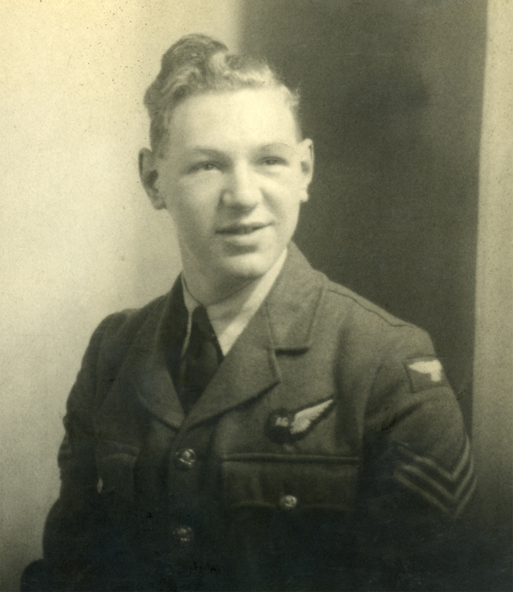
William Howarth

Pic: Howarth family

Sgt W Howarth
Front gunner

Lancaster serial number: ED921/G

Call sign: AJ-W

Second wave. Aircraft badly damaged by flak on outward flight. Returned to base with mine intact.

William (Bill) Howarth was born in Oldham, Lancashire on 29 August 1921. His father was also named William Howarth, and he was a warehouse foreman in the cotton industry. His mother was Lily Howarth (nee Martin), and she worked as a cotton operative. Howarth went to Higginshaw School, Oldham, and on leaving school worked as a grocer’s manager.

He joined the RAF in 1941, and was eventually selected for Air Gunner training, which he completed in August 1942. He crewed up with Les Munro, Jock Rumbles and Percy Pigeon at the end of September 1942, during heavy bomber training. Frank Appleby also joined the crew at the same time. These five would serve together uninterrupted for another 20 months.

Like his colleagues, he had completed some 20 operations with Munro by the time they volunteered for transfer to the new 617 Squadron. On the Dams Raid, he was positioned in the front gun turret and afterwards agreed with his captain that the damage to AJ-W was caused by land-based ‘light flak guns’.

Howarth went on to complete more than 50 operations with Munro by the time the crew were taken off operational duties in July 1944. He was recommended for the DFM in April 1944. The citation read:

Flight Sergeant Howarth has completed 41 operational sorties as Air Gunner and many of these have been against the most heavily defended targets in Germany and Italy. He has operated continuously since January 1943, and his last 20 sorties have been carried out against objectives in occupied Europe whilst operating with a special duties squadron. During these operations, his exceptional coolness and marked ability as an Air Gunner has materially assisted his Captain in pressing home the attacks against opposition. Flight Sergeant Howarth’s marked enthusiasm for operations and his outstanding devotion to duty merit the highest praise. He is therefore strongly recommended for the award of the Distinguished Flying Medal. (10 April 1944).

Howarth was commissioned in June 1944. He spent the remainder of the war in various training roles, rising to the rank of Flight Lieutenant, and acting as Gunnery Leader in several different establishments. He left the RAF in June 1946 and returned to his former job in the grocery trade for a short time, before joining the Prudential Assurance Company in 1947 where he worked until retirement.

He married Doris Hall, a munitions worker, on 3 July 1943, and they had three sons, one of whom died in infancy. During both his working life and his retirement he was actively involved in fundraising for the Leonard Cheshire Homes.

Bill Howarth died on 12 January 1990, and was cremated at Hollinwood crematorium, Oldham.

[Thanks to David Howarth and Kevin Bending for help with this article.]

Survived war.

Rank and decorations as of 16 May 1943.
Sources:
Richard Morris, Guy Gibson, Penguin 1995
John Sweetman, The Dambusters Raid, Cassell 2002
James Holland, Dam Busters: The Race to Smash the German Dams 1943, Bantam 2012

The information above has been taken from the books and online sources listed above, and other online material. Apologies for any errors or omissions. Please add any corrections or links to further information in the comments section below.
Further information about William Howarth and the other 132 men who flew on the Dams Raid can be found in my book The Complete Dambusters, published by History Press in 2018.
Jackson speaks: Dambusters a ‘wonderful story’ which I will have to do.


peter-jackson-hobbit
Peter Jackson has been giving interviews to mark the end of the process of making The Hobbit trilogy, which combined with the Lord of the Rings make up a series of six films that have taken his company almost fifteen years to complete. Already the films have grossed $4.89 billion in worldwide box office takings and by the time The Battle Of The Five Armies, the finale to The Hobbit trilogy, plays out, the total may reach $6 billion. 

Now, in an interview posted on the Deadline blog, Jackson has admitted that he probably would have started on the remake of The Dam Busters four or five years ago, having handed over directorial duties on The Hobbit to Guillermo del Toro. But del Toro left this project in May 2010 and Jackson stepped back behind the camera, saying that it was important to protect Warner Bros’ investment. He admits that all the time since there has been pressure on him to say what he will be doing next:

I’ve had so many people the last five years come and ask, ‘When are you going to make The Dam Busters? When are you going to make The Dam Busters?’ Honestly, you ask me what I got out of five years of making The Hobbit? It was me feeling like I have to make The Dam Busters, because of the endless people asking, ‘When are you going to make The Dam Busters?… 
[W]e still have the rights, and it’s one in a little pot of movies. We don’t have a next movie nailed down, but certainly The Dam Busters is one of them. There is only a limited span I can abide, of people driving me nuts asking me when I’m going to do that project. So I’ll have to do it. I want to, actually, it’s one of the truly great true stories of the Second World War, a wonderful, wonderful story.

I reckon that’s as near as we have come to a real commitment from Jackson to make the film. But when will it happen? He has a pretty busy schedule: Hobbit 3 is due for worldwide release in December 2014, and then there is the small matter of the second Tintin movie, scheduled for release in 2016, which he is also due to direct. (He did a deal with Steven Spielberg.) He won’t be directing The Dam Busters, but it will surely take up quite a bit of his time so it could fit into his schedule here – before a third Tintin movie, so far untitled.
If The Dam Busters is ever going to get to the clapperboard stage, the next thing to expect would be news that the difficulties with the screenplay have been ironed out, that the director is confirmed (a role earmarked eight years ago for Jackson protegé, Christian Rivers) and, most important of all, that Universal Pictures and Studio Canal are still behind the project. 

Watch this space.

Two to tango

Two Lancs
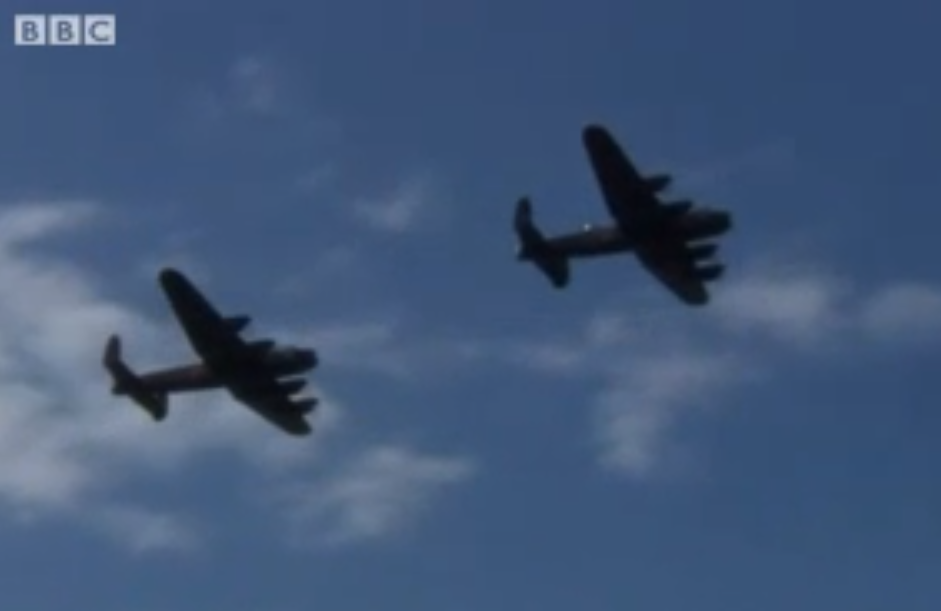
There was a report on BBC East news last night on the first flight together by both Lancasters. They took off from Coningsby on two occasions and flew several practice manoeuvres. The first scheduled public appearance is at Eastbourne Air Show at 1500, later today and on other days this week. Also at the Combined Ops Show, Flying Proms (Shuttleworth), Herne Bay Air Display and Sywell Great War Airshow later this week.

Dambuster of the Day No. 75: James Clay

Pic: Clay family

Sgt J H Clay
Bomb aimer

Lancaster serial number: ED921/G

Call sign: AJ-W

Second wave. Aircraft badly damaged by flak on outward flight. Returned to base with mine intact.

James Henry Clay was born on 2 February 1911 in North Shields, Tyne and Wear. His parents, Robert and Mary Clay, had 12 children of whom James was the fifth. Robert Clay worked as a stonemason.

After joining the RAF and qualifying as an air bomber, Jimmy Clay crewed up with Canadian pilot Marcel Cuelenaere while training, as did his future Dams raid colleague Harvey Weeks. This crew joined 97 Squadron at Woodhall Spa in October 1942. (By the war’s end, Cuelenaere had completed two tours, reached the rank of Squadron Leader and been awarded the DFC and Bar. He returned to Canada and set up a successful law firm.)

Clay was in fact in operation before the rest of his crewmates, having been allocated to the crew of another Canadian pilot, George Lancey, for the famous daylight raid on the Le Creusot works on 17 October 1942. This, however, resulted in an early return with engine trouble.

The Cuelenaere crew were in action together ten days later, and began a run of almost 30 operations together which ended in March 1943, when their pilot reached the end of his tour. This coincided with the call for volunteers for the new 617 Squadron, which Les Munro and most of his crew decided to accept. However, as they were short of a bomb aimer, Clay volunteered to go with them.

Clay settled in with his new crew and was in front row position on the Dams Raid when AJ-W was hit by flak while crossing the Dutch coast. He maintained that the damage came from a flak ship, disagreeing with Bill Howarth and Les Munro who both thought it came from a land-based installation. Clay wrote afterwards: ‘Then we were over Vlieland in the Zuider Zee (Waddenzee) when suddenly a flak ship opened up. None of us in the aircraft saw this vessel although we had, as customary, been keeping a sharp lookout. We must have been a sitting target to the gunners below, a close target silhouetted against the sky.’ John Sweetman quotes this account in The Dambusters Raid (Cassell, 2002) and adds: ‘Perhaps significantly, a detachment of 3/Marine Flak 246 stationed at the western end of Vlieland did report engaging “several Lancaster bombers” between 2257 and 2340 on 16 May.’ (p.180).

Clay’s next operation was some two months later. He received a flesh wound to the nose caused by a bomb fragment when the Munro crew attacked an Italian power station, but flew a little too low over the target. They went on to land in RAF Blida, Algeria. Luckily, he made a recovery from this injury and went on to fly with Munro some 17 more times until May 1944.

He was commissioned in November 1943, and received the DFC in July 1944. The citation said that he had completed 46 operations without a break. He served in various training units until the end of the war and left the RAF in December 1945.

Jimmy Clay returned to Tyneside after the war. In 1944, he married Patricia Butcher, a widow with one daughter. They had another daughter together. He worked as an accountant, and died in Gosforth on 6 August 1995.

Survived war.

Rank and decorations as of 16 May 1943.
Sources:
Richard Morris, Guy Gibson, Penguin 1995
John Sweetman, The Dambusters Raid, Cassell 2002
James Holland, Dam Busters: The Race to Smash the German Dams 1943, Bantam 2012

The information above has been taken from the books and online sources listed above, and other online material. Apologies for any errors or omissions. Please add any corrections or links to further information in the comments section below.

Further information about James Clay and the other 132 men who flew on the Dams Raid can be found in my book The Complete Dambusters, published by History Press in 2018.
She’s on her way

Canadian Lanc
Photo: Derek Mickeloff

Slowly and sedately, as befits its mature years, the Canadian “Mynarski” Lancaster, VR-A, is making its way to Britain. It left its home base in Hamilton, Ontario, on Tuesday, a day later than intended after some engine problems. But after a night on the far edge of Canada, in Goose Bay, Labrador, it has skipped past Greenland and landed in Iceland. It is expected to arrive at RAF Coningsby, the home of the BBMF and its Lancaster, at 1.30pm on Friday. Over 100 Bomber Command Veterans are expected to be in attendance as special guests for the arrival.
The Lancaster belongs to the Canadian Warplane Heritage Museum and is a Mk X model built in July 1945. It is dedicated to the memory of Plt Off Andrew Mynarski and is referred to as the “Mynarski Memorial Lancaster”. It is painted in the colours of his aircraft KB726, coded VR-A, which flew with RCAF No. 419 (Moose) Squadron. Andrew Mynarski won the Victoria Cross on 13 June 1944, when his Lancaster was shot down in flames, by a German night fighter. As the bomber fell, he attempted to free the tail gunner trapped in the rear turret of the blazing and out of control aircraft. The tail gunner miraculously survived the crash and lived to tell the story, but sadly Andrew Mynarski died from his severe burns.
Shortly after arriving, the Lancaster will undergo a scheduled maintenance inspection and then the Canadian crews will complete a short training programme with the BBMF. The two Lancasters will participate in several air displays together starting on 14 August.
VR-A will leave the UK on 22 September.
The full schedule can be found here.

Dambuster of the Day No. 74: Percy Pigeon

Canadians damsraid15a

The Canadian survivors from the Dams Raid pose for the camera. Percy Pigeon is first on the left in the front row, crouching.

Wt Off P E Pigeon
Wireless operator

Lancaster serial number: ED921/G

Call sign: AJ-W

Second wave. Aircraft badly damaged by flak on outward flight. Returned to base with mine intact.

Percy Edgar Pigeon was born on 3 June 1917 in Williams Lake, a small town in the centre of British Columbia, Canada. His family had a small ranch in the area. He attended Williams Lake School, and then worked in a local general store.

After initial training and qualification as a wireless operator/air gunner in Canada, he embarked for England. In late 1942 he crewed up at a training unit with the New Zealander Les Munro, Grant Rumbles from Scotland and Englishman Bill Howarth, a quartet who would fly together without interruption for the next two years. They went on two operations in a Wellington in September before moving onto heavy bomber training. They transferred to the front line, in December, joining 97 Squadron at Woodhall Spa. 
Pigeon went on to fly some 20 further operations with Munro between January and March 1943, and then volunteered to accompany Munro and most of the rest of the crew to the new squadron being formed at Scampton.

After the Dams Raid, and their enforced early return, the crew’s next trip was to attack a power station in Italy, a long journey which ended with a refuelling stop at the newly liberated RAF station in Blida, Algeria.

In September 1943, Pigeon was recommended for a commission, which duly came through three months later. 
From November through to July 1944, the crew undertook some 30 more operations and Pigeon was awarded a well-deserved DFC. When they were taken off ops, he went to a training unit before returning to Canada in December 1944.

Percy Pigeon stayed on in the RCAF after the war, serving in its Maritime Air Command and finally retiring in 1962 as a Flight Lieutenant. In 1955, as one of the five Dams Raid veterans still serving in the RCAF, he was flown to London to attend the premiere of the film, The Dam Busters.

He died on 23 March 1967 in Williams Lake, and is buried in the town’s cemetery.

[Thanks to Greg Pigeon for help with this article.]

Survived war.

Rank and decorations as of 16 May 1943.
Sources:
Richard Morris, Guy Gibson, Penguin 1995
John Sweetman, The Dambusters Raid, Cassell 2002
James Holland, Dam Busters: The Race to Smash the German Dams 1943, Bantam 2012

The information above has been taken from the books and online sources listed above, and other online material. Apologies for any errors or omissions. Please add any corrections or links to further information in the comments section below.

Further information about Percy Pigeon and the other 132 men who flew on the Dams Raid can be found in my book The Complete Dambusters, published by History Press in 2018.

Dambuster of the Day No. 73: Grant Rumbles

Blida truck lo res
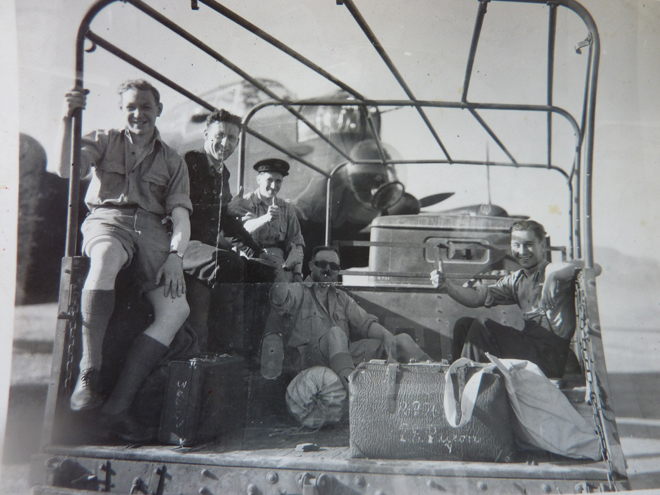
Five of Les Munro’s crew from the Dams Raid, photographed two months later, at RAF Blida in Algeria. L-R: Bill Howarth, gunner; Harvey Weeks, gunner; Grant Rumbles, navigator; Jimmy Clay, bomb aimer, with a damaged nose caused by bomb fragments; Percy Pigeon, wireless operator. [Pic: Howarth family]

Flg Off F G Rumbles
Navigator

Lancaster serial number: ED921/G

Call sign: AJ-W

Second wave. Aircraft badly damaged by flak on outward flight. Returned to base with mine intact.

Francis Grant Rumbles was born on 14 September 1920 in Kirtlebridge, Dumfriesshire. His father was the headmaster of Breconbeds School in the village, and the young Grant was educated there. He joined the RAF in October 1940, and inevitably acquired the nickname ‘Jock’. He was originally selected for pilot training, but ended up qualifying as a navigator. Part of his training was spent in Port Elizabeth in South Africa, and he was commissioned in April 1942.

Rumbles crewed up with Les Munro at 29 Operational Training Unit in July 1942, along with Bill Howarth, and the crew undertook two operations in September 1942 while still under training. They went on to heavy bomber training and arrived at 97 Squadron at Woodhall Spa in December 1942. At this time, Rumbles and Munro were the only two officers in the crew, so they were given a room in the comparative luxury of the Petwood Hotel, in its wartime role as the station’s Officers Mess.

Munro and his crew completed another 20 or so operations in the first three months of 1943, and then volunteered for transfer to the new 617 Squadron at RAF Scampton.

In June 1943, soon after the Dams Raid, Rumbles was awarded the DFC for his 23 operations completed while in 97 Squadron. He went on to complete 33 more, and was awarded a Bar to the DFC in June 1944.

When the Munro crew were all taken off operations in July 1944, Rumbles was posted to RAF Waddington and later onto a specialist navigation course. Towards the end of the war he became Squadron Navigation Officer for 189 Squadron and then Station Navigation Officer at RAF Bardney.

He stayed on in the RAF for a short while after the war, serving in Singapore and Japan, before retiring in 1947 as a Squadron Leader. He then moved to South Africa.

Grant Rumbles died in Port Elizabeth, South Africa, on 26 February 1988 and was cremated there. He is commemorated in the city’s Victoria Park Crematorium.

More about Rumbles online:
Facebook page about Breconbeds School, with obituary of his father.

Survived war. Died 26 February 1988.

Rank and decorations as of 16 May 1943.
Sources:
Richard Morris, Guy Gibson, Penguin 1995
John Sweetman, The Dambusters Raid, Cassell 2002
James Holland, Dam Busters: The Race to Smash the German Dams 1943, Bantam 2012

The information above has been taken from the books and online sources listed above, and other online material. Apologies for any errors or omissions. Please add any corrections or links to further information in the comments section below.

Further information about Grant Rumbles and the other 132 men who flew on the Dams Raid can be found in my book The Complete Dambusters, published by History Press in 2018.

Dambuster of the Day No. 72: Frank Appleby

MUNRO CREW lores
The crew of AJ-W, photographed in 1943. Back, L-R: Les Munro, pilot; Jimmy Clay, bomb aimer; Bill Howarth, front gunner; Harvey Weeks, rear gunner. Front, L-R: Grant Rumbles, navigator; Frank Appleby, flight engineer; Percy Pigeon, wireless operator. [Pic: Les Munro]
Sgt F E Appleby
Flight engineer

Lancaster serial number: ED921/G

Call sign: AJ-W

Second wave. Aircraft badly damaged by flak on outward flight. Returned to base with mine intact.

Frank Ernest Appleby was born on 3 November 1921 in Eastbourne, Sussex, one of the eight children of Thomas and Ethel Appleby. His father was a fitter in the gas works. Appleby volunteered for the RAF at the age of 18, in August 1939 a few weeks before the outbreak of war. He was assigned to ground crew as a maintenance engineer, but then trained as a flight engineer.

Appleby crewed up with Les Munro, Grant Rumbles, Bill Howarth and Percy Pigeon while at 1654 Conversion Unit in October 1942. He had completed some 18 operations with Munro in 97 Squadron when they were all transferred to 617 Squadron in March 1943.

The Munro crew’s participation on the Dams Raid came to a premature end after they were hit by flak crossing the Dutch coast. They were next back in action two months later on the squadron’s next operation, where they flew on to a base in the newly liberated Algeria after attacking Italian power stations. Appleby went on to serve as Munro’s flight engineer right through to the end of the crew’s tour in July 1944.

In April 1944, Appleby was recommended for the DFM. The citation read:

Sorties 39. Flying Hours 248.25.
Flight Sergeant Appleby has completed 39 operational sorties as a Flight Engineer against heavily defended targets in Germany, Italy and France. He began operating in January 1943, and chose on the expiration of his first tour to carry on without a rest period. He has always enjoyed the complete confidence of his captain by his capable handling of the engines. When the aircraft has been heavily engaged by enemy defences, he has always displayed exceptional calmness and presence of mind. Since volunteering in March 1943 to join a special duties squadron, his utter contempt for personal safety and unflinching courage have proved an inspiration to all his crew. He is therefore strongly recommended for the award of the Distinguished Flying Medal. (10 April 1944).

Although he was a firm believer in a bomber crew’s strict hierarchy (the pilot was “the leader, the boss, the director of what went on in the aircraft”), the ever-cautious Munro eventually had enough confidence in the man who sat next to him for so long:

“[Munro] learnt that many pilots handed over the controls to their flight engineer on their way home. “This practice became more common as the risk of Jerry night fighter attack diminished. I must admit that it was a long time before I was prepared to hand over the controls to Frank and when I did he handled them quite well. When I was confident of his ability to stick to the course and height I would take over from the gunners in their turrets and get a feel for their contribution to the team effort.”
John Sweetman, Bomber Crew, Abacus 2005, pp.111-2.

Munro and all his crew were finally taken off operations in July 1944, each of them having completed more than 50 sorties. Appleby went on to serve in various administrative and training functions in the RAF until the end of the war, when he returned to civilian life.

Frank Appleby died in Eastbourne on 15 September 1996.

[Thanks to Kevin Bending for help with this article.]

Survived war.

Rank and decorations as of 16 May 1943.
Sources:
Richard Morris, Guy Gibson, Penguin 1995
John Sweetman, The Dambusters Raid, Cassell 2002
James Holland, Dam Busters: The Race to Smash the German Dams 1943, Bantam 2012

The information above has been taken from the books and online sources listed above, and other online material. Apologies for any errors or omissions. Please add any corrections or links to further information in the comments section below.

Further information about Frank Appleby and the other 132 men who flew on the Dams Raid can be found in my book The Complete Dambusters, published by History Press in 2018.

Gibson hands out the prizes

gibson ball lores

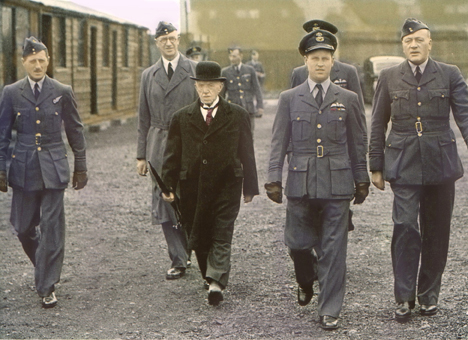
Guy Gibson striding out purposefully. The gentleman in the bowler hat is Sir Albert Ball. [Pic: 49 Sqn Association]

After the Dams Raid, many 617 Squadron personnel, and particularly its Commanding Officer, were prevailed on to attend various functions. This photo was taken on one such occasion, a visit to Nottingham on Saturday 10 July 1943 to present the ‘Albert Ball VC’ Memorial Sword to the best ATC cadet plus other prizes of merit. Sir Albert Ball had presented the Sword of Honour to the ATC in memory of his late son, the First World War RFC pilot who won the VC after his fatal last flight in 1917, when he was shot down, possibly by the younger brother of the Red Baron, Lothar von Richthofen. Guy Gibson also presented an Efficiency Cup to an ATC Officer.  The location is Trent Lane ATC HQ.

Dambuster of the Day No. 71: Leslie Munro

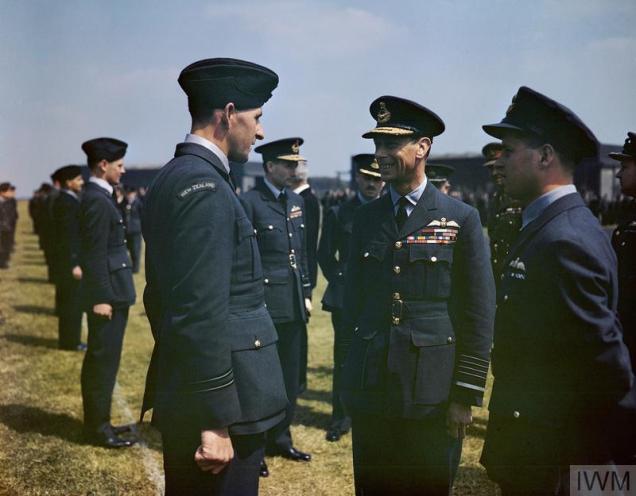
Les Munro meets the King, Scampton, 27 May 1943 [Pic: IWM TR999]

Flt Lt J L Munro
Pilot

Lancaster serial number: ED921/G

Call sign: AJ-W

Second wave. Aircraft badly damaged by flak on outward flight. Returned to base with mine intact.

John Leslie Munro was born in Gisborne on the North Island of New Zealand on 5 April 1919, the oldest of three children. His family had a sheep station a few miles outside town. It emerged in about 1999 that his mother had another child, a daughter born in 1913, in an earlier relationship but had given her up for adoption.

Munro was educated in local schools, but left at 14 to work in farming. When the war came he waited until 1940, when he was 21, to volunteer for the RNZAF. He wanted to be a pilot. but he was told that his educational qualifications were ‘insufficient for pilot training’ and that he would have to be a gunner. Not to be put off, he spent the next 12 months studying at home, doing a maths course before reapplying. This time he was successful and he was enlisted into the RNZAF in July 1941.

After initial training in New Zealand Munro was sent to Canada to complete bomber training and qualified as a pilot in February 1942, receiving a commission at the same time. After arriving in England, and the usual delays that followed, he was sent for further training.

The core of the crew who would fly with Munro throughout most of his career began to be assembled at their Operational Training Unit, when navigator Jock Rumbles and wireless operator Percy Pigeon first teamed up with him. While still at the OTU, in September 1942, they undertook two operations. The second of these, when they were scheduled to attack Bremen, nearly ended in disaster, when their Wellington’s engines lost power shortly after take off and they crashlanded in a nearby field.

Munro moved onto heavy bomber training at the end of September 1942, along with Rumbles and Pigeon, and they were joined by flight engineer Frank Appleby and gunner Bill Howarth. All five joined 97 Squadron at Woodhall Spa in December 1942, to begin operational flying. Their first operation on 8 January 1943 was minelaying, followed on 13 January by an attack on Essen.

Some 17 further operations would follow in the next ten weeks, but in that time the crew flew with no fewer than eight different bomb aimers, including a Sub Lt Bill Lett RN, seconded for a period to the RAF. Then, towards the end of March a new opportunity presented itself. In a 2010 interview, Munro recalled:

A letter from 5 Group went up on the noticeboard. I quite distinctly remember this, and I called my crew together and said “Look, there’s been a call for volunteers to form a new squadron”. (Interview with James Holland 2010)

Most of the crew decided that they would go to the new squadron, but they were still without a regular bomb aimer, and the rear gunner chose not to accompany them. So they were joined by bomb aimer Jimmy Clay and rear gunner Harvey Weeks, who had both almost completed their operational tours with another 97 Squadron crew piloted by the Canadian, Marcel Cuelenaere.

Two other 97 Squadron crews, captained by David Maltby and Joe McCarthy, had also been selected for the new squadron. Guy Gibson had telephoned McCarthy, whom he had met while McCarthy was training, and asked him to join the new squadron, but it seems that he did not previously know either Maltby and Munro. Munro is fairly sure that they were all transported from Woodhall Spa to Scampton on a crew bus, probably on Thursday 25 March 1943, and that there was a large gathering in the Officers Mess that evening.

With hardly any time to settle in, the crews were put to intensive low level flying training, flying on borrowed Lancasters while the special ones for the Dams Raid were being assembled. Munro’s training went smoothly enough, although he and his crew had a near miss when flying low over the North Sea they suddenly saw a naval convoy ahead and had to climb steeply to avoid it.

As the detailed plans for the raid were being put together, both Les Munro and Joe McCarthy were originally placed in the first wave, the nine crews tasked with attacking the Mohne and Eder Dams. However, about five days before the actual operation, Gibson and the other planners decided to beef up the second wave, who would attack the Sorpe Dam, and placed Munro and McCarthy there instead. This wave, with further to travel, were in fact scheduled to leave Scampton before the first wave and so Munro’s AJ-W was the second aircraft to take off on Operation Chastise, at 2129 on 16 May 1943.

All went well for the first 85 minutes, and on reaching the Dutch coast near Vlieland the mine was fused. But then the aircraft was hit by flak. Munro and front gunner Bill Howarth  say that this was fired from a land battery, but bomb aimer Jimmy Clay recorded that it was a flak ship which spotted them. Whichever it was, it did severe damage. The intercom was put out of action, the master unit for the compass was destroyed and the tail turret pipes damaged.

Munro kept on flying for a while but sent flight engineer Frank Appleby down to the nose to check with Clay. He passed him a note: “Intercom U/S – should we go on?” Clay remembered his reply: ‘I wrote: “We’ll be a menace to the rest.” Had it been a high-level operation there would have been time to make up some sort of signals between Bomb Aimer, Flight Engineer and Pilot which may have worked. But on a quick-moving low-level operation like this and with other aircaft in close proximity Les could neither give nor receive flying instructions from the navigator nor bombing instructions from the bomb aimer’ and the rear gunner, Harvey Weeks, was completely isolated.

Wireless operator Percy Pigeon was sent to check up on Weeks, but in doing so saw the gaping hole in the fuselage, with a host of broken wiring. He told Munro it would be impossible to fix this while airborne. So, reluctantly, Munro altered course and turned for home. When he got to Scampton he was unable to radio the control tower to tell them that he would be landing, so he went straight in. Unknown to him, another early return, Geoff Rice, was circling a severely damaged AJ-H above the runway getting his crew into crash positions. An embarrassing and dangerous incident was narrowly avoided.

Munro landed at 0036, the first crew to return from the operation. Some time later that morning, during the impromptu party that was going on in the Officers Mess, Gibson came up to him:

“Well, what happened, Les?” he asked him. Munro told him he had been hit by flak.
“Oh, you were too high,” Gibson replied.
Munro was about to protest and give his side of the story, but Gibson had already turned and walked away. It rankled with Munro, who felt that he had not been given a fair hearing. Nor did he feel that he could raise the matter again; it was the last time either of them ever mentioned it.
[James Holland, Dam Busters: The race to smash the German Dams, Bantam 2012, p.358]

Even though his role in the Dams Raid had come to a premature end, Munro still participated in the events that followed. He was presented to both the King and Queen during the royal visit on 27 May. Gp Capt Leonard Slee, the officer who was accompanying the Queen, didn’t seem to know his name, so the forthright Munro stepped in, not aware he was breaking some sort of protocol. “My name’s Munro,” he told her. Then, a few weeks later he was at the famous Hungaria Restaurant party in London given by Avro, and still has a menu card signed by by most of the other diners. Earlier in the month, he had already been decorated with a DFC, awarded for his 21 operations in 97 Squadron.

617 Squadron went back on operations in July 1943, and Munro’s was one of the crews which took part in a raid on Italian power stations from where they flew on to Blida in North Africa. They flew a little too low and a flak hit resulted in a burst tyre and a flesh wound to bomb aimer Jimmy Clay’s nose.

These summer operations were probably not too dangerous, but the next one certainly was. This was the catastrophic raid on the Dortmund Ems Canal, which resulted in the loss of six crews out of the nine who participated on the two nights. Munro was not selected for this operation, which was extremely fortunate. However, he was back on duty straight afterwards in another abortive attack, this time on the Antheor Viaduct. Another short gap followed, but then between November 1943 and July 1944 he undertook almost 30 more operations. He became Flight Commander of the Squadron’s B Flight and was temporarily CO of the whole squadron for some of February 1944 while Leonard Cheshire was on leave. In April 1944 he was awarded the DSO.

A month after D-Day, Munro was taken off operations, along with Cheshire, David Shannon and Joe McCarthy. AVM Ralph Cochrane, the CO of 5 Group, decided that all four were on ‘borrowed time’ and should cease immediately.

Munro spent the rest of the war in a training flight, and was finally demobilised in February 1946. He returned to New Zealand, and the business of running a sheep farm. He was active in politics for a while and became Mayor of Waitomo District, where there is now a street named after him.

In 2013 he flew to the UK for the last time, and took a full part in the 70th anniversary commemoration of the Dams Raid. He was accompanied by one of his sons and an official from the New Zealand High Commission. When this official was asked whether he was there as Les’s ‘minder’ he was quick to say that Les didn’t need any minding whatsoever.

Shortly before his death Munro made the very generous offer to sell his medals and memorabilia (which include a signed menu from the post-raid dinner at the Hungaria Restaurant) to raise funds for the Bomber Command Memorial in London. He felt strongly that the sacrifice of the 55,000 aircrew who died in the war should continue to be honoured. However, the collection was saved for the Museum of Transport and Technology in Auckland, by being purchased by the British peer and collector Lord Ashcroft.

Les Munro died on 4 August 2015 in Tauranga, New Zealand.

More about Munro online:
Entry at Wikipedia
Wings Over New Zealand: two audio interviews from 2010, each about 60 minutes. Interview 1/Interview 2.
Interview with James Holland, 2010 (unedited and with many transcription errors)

Survived war.

Rank and decorations as of 16 May 1943.
Sources:
Richard Morris, Guy Gibson, Penguin 1995
John Sweetman, The Dambusters Raid, Cassell 2002
James Holland, Dam Busters: The Race to Smash the German Dams 1943, Bantam 2012

The information above has been taken from the books and online sources listed above, and other online material. Apologies for any errors or omissions. Please add any corrections or links to further information in the comments section below.

Further information about Les Munro and the other 132 men who flew on the Dams Raid can be found in my book The Complete Dambusters, published by History Press in 2018.