Guy Gibson’s relationship with the crew who flew with him on the Dams Raid is one of the interesting sub-plots of the whole Dambusters story. In contrast to the scene in the 1955 film where his old crew discuss his posting to a new squadron on his own and then unanimously decide to go with him, only one, wireless operator Robert Hutchison, had actually flown with Gibson in 106 Squadron. Hutchison is thought to have recommended navigator Harlo Taerum, who in turn recommended bomb aimer Fred (Spam) Spafford. Both of these had been in 50 Squadron, as had rear gunner Richard Trevor-Roper. These four were all officers, which meant that Gibson would see something of them socially at Scampton, but the final pair, front gunner George Deering and flight engineer John Pulford were both NCOs.
This may be why Gibson had a rather low opinion of both. In his biography of Gibson, Richard Morris writes how in the first draft of Enemy Coast Ahead he described Deering as:
‘pretty dumb’ (tactfully changed to ‘pretty green’ in the published version) ‘and not too good at his guns and it was a bit of a risk taking him’. This was rubbish, as Deering had flown thirty-five operations.
Morris goes on to cite Gibson’s opinion of Pulford, who he described as a ‘sincere and plodding’ Londoner:
Gibson had a low opinion of Pulford, thinking him dull and incapable of independent thought. This may say more about Gibson than Pulford, for Gibson never listened to him long enough to notice that he came from Yorkshire rather than London. In the cockpit of Gibson’s Lancaster there was a distinct air of master and servant. In the fuselage as a whole his crew represented Britain’s class structure in microcosm and the pattern of the Empire beyond. (Richard Morris, Guy Gibson, Penguin, 1995, p.152.)
Whatever their relationship, the crew were not together for very long, flying just the one operation as a complete crew, the Dams Raid itself. Hutchison, Taerum, Spafford and Deering transferred to George Holden’s crew when he took over command of 617 Squadron, and died with him on the Dortmund Ems Raid on 16 September 1943.
None of the other three survived the war. Trevor-Roper and Gibson died later in 1944, both on operations with other squadrons, but Pulford was still in 617 Squadron when he flew on the operation to bomb the Antheor viaduct in southern France in February 1944. His pilot, Bill Suggitt, landed the aircraft successfully at Ford in Sussex, which they had used as a staging post, but in the short hop home from Ford to Woodhall Spa, they crashed into a hill on the Sussex Downs, near the village of Upwaltham.
For some years local people have been collecting for a proper memorial to Suggitt’s crew, and it was unveiled on 22 August:
Today, 65 years on, the crew of DV382 KC J-Jug will be honoured in a tiny parish church just below the crash site at Upwaltham, West Sussex, after the hamlet of 25 inhabitants raised £10,500 for a memorial.
Relatives of the British, Canadian and Australian victims will attend, along with air attaches from all three nations and 617 Squadron’s current commanding officer.
The white Italian stone ‘Four Nations Memorial’ also remembers seven Americans whose Dakota aircraft crashed across the valley a year later in February 1945.
A Lancaster from the Battle of Britain Memorial Flight will complete three circuits overhead at the ceremony, which will also be attended by relatives of the farm workers who were honoured by King George VI for braving flames and exploding ammunition to try to rescue the Lancaster crew.
Today, 65 years on, the crew of DV382 KC J-Jug will be honoured in a tiny parish church just below the crash site at Upwaltham, West Sussex, after the hamlet of 25 inhabitants raised £10,500 for a memorial.
Relatives of the British, Canadian and Australian victims will attend, along with air attaches from all three nations and 617 Squadron’s current commanding officer.
The white Italian stone ‘Four Nations Memorial’ also remembers seven Americans whose Dakota aircraft crashed across the valley a year later in February 1945.
A Lancaster from the Battle of Britain Memorial Flight will complete three circuits overhead at the ceremony, which will also be attended by relatives of the farm workers who were honoured by King George VI for braving flames and exploding ammunition to try to rescue the Lancaster crew.
There is a nice tribute page to the crew on the Roll of Honour website. John Pulford’s body was recovered and he was buried in Hull.

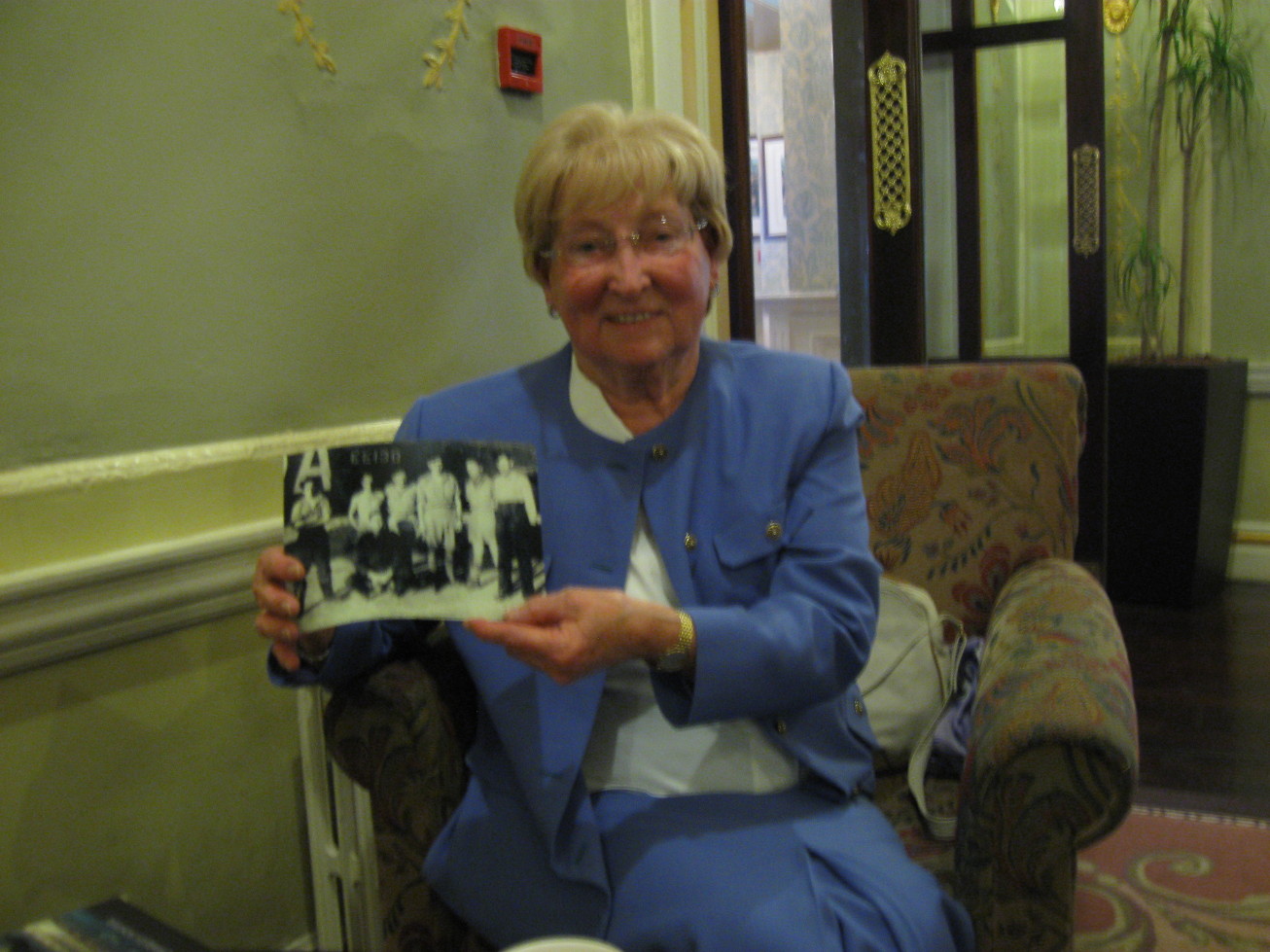
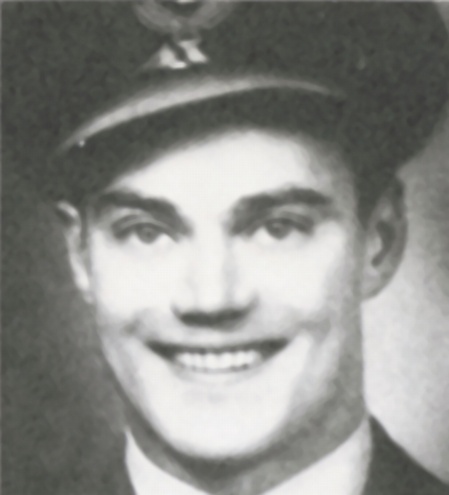


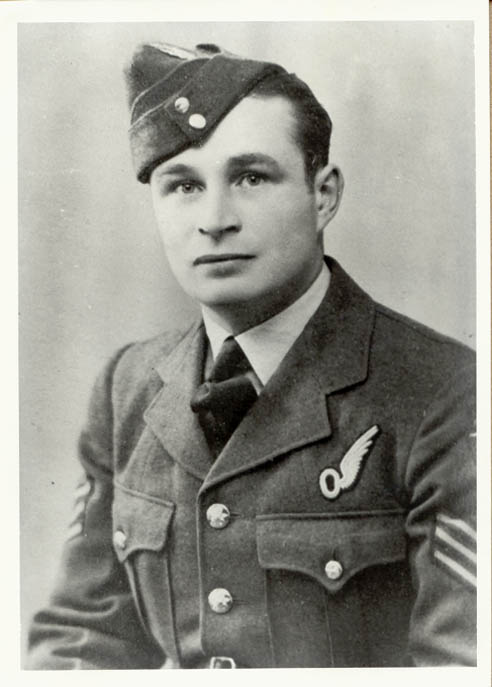


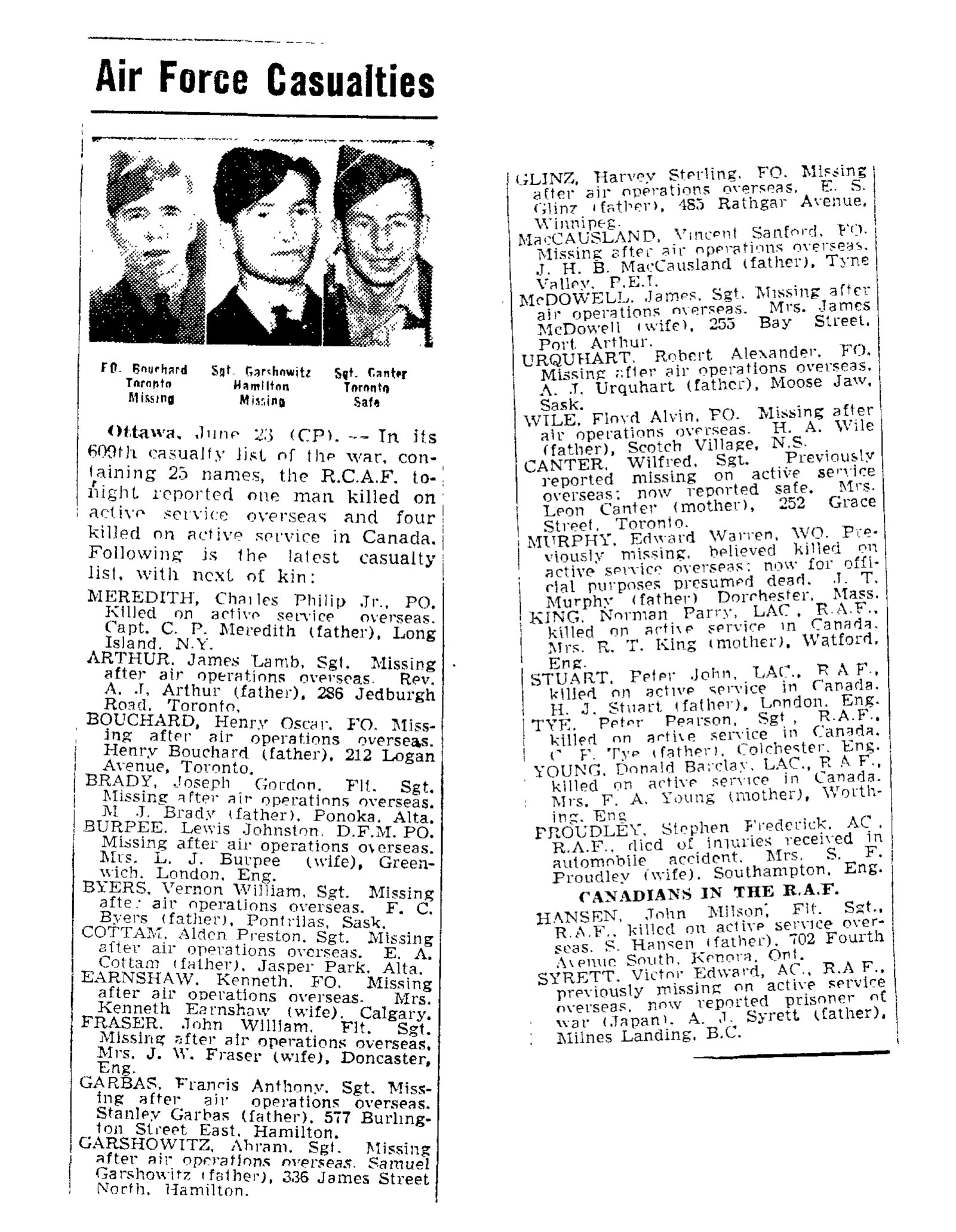

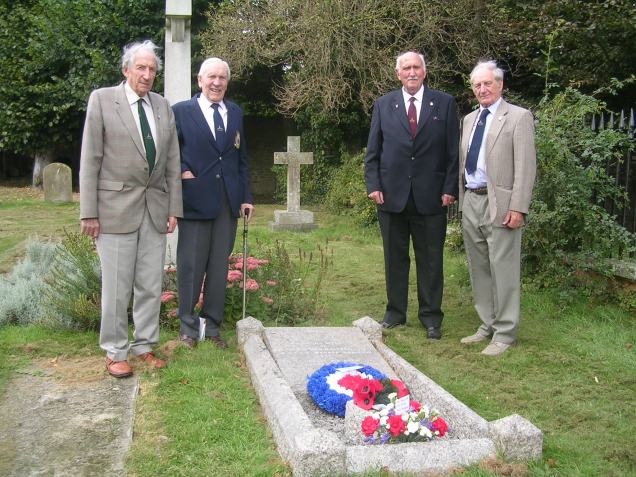 (Picture shows the Aircrew Association’s 2007 tribute.)
 Dambusters Blog