New German film shows Eder Dam after raid

Thomas Schindler, a correspondent from a German TV station, has sent me this link to the recent broadcast of some hitherto unseen film of the aftermath of the destruction of the Eder Dam on 17 May 1943. During the war, secret filming by German citizens was forbidden, with the threat of the death penalty for anyone caught. However a soldier naval officer on leave shot this film, and it has recently been given to the TV station.
My German isn’t up to much, so if anyone can translate what the interviewees say and the voiceover material  I’d be very grateful. Please leave a comment below or send me an email.

UPDATE: Dave, a poster on the Lancaster-Archive Forum, has kindly provided the gist of a translation:

Hermann Hauschild was a naval officer from Bergheim home on leave when he secretly filmed the aftermath of the attack on the Eder dam on May 17th 1943. Secretly, because if caught, the death penalty would apply. He specified that the film may only be made public after his death. The ruins shown are of Affolden, where both the church and the school were destroyed and 10 people died.The RAF asked for a copy after the war, but otherwise the film was almost forgotten. Karl Schaefer was asked to repair the camera and was given the film as payment. The camera still works well after 80 years, and the film is regarded by the family as an heirloom. Hermann Hauschild died twenty years ago.
Jackson shows Dambusters clips to press

More news from the Great One on the remake of the Dambusters film. At a recent briefing for the press, Peter Jackson told the assembled hacks that the movie was likely to be shot in 3D, and also showed some clips. However, he’s still working on the script, so shooting may still be a way off…

He also showed us short bits from the remake of The Dam Busters he’s working on. The original film came out in 1955, and takes place in a WWII setting. It’s based on the true story of the RAF’s 617th Squadron that would bomb Germany’s dams in an effort to hinder the Reich’s war machine. Jackson is just waiting to finish another draft of the script before that moves forward. He’s thinking about shooting it in 3-D, which is why he’s been playing with the technology.

The phrase “617th Squadron” is a bit of a giveaway that this appeared on a US-based website!

Time Magazine: report on Dams Raid from May 1943

An interesting report from May 1943 on the Dams Raid from Time Magazine’s online archive. It contains a number of inaccuracies, due to the restrictions imposed by the censor, but nevertheless has a certain breathy contemporaneity:

It was a matter of seconds now. The bomb bay doors were open; the flak had begun, pin points of yellow blossoming slowly upward, then sliding by with a rush into the sky above. Now the planes were roaring 50 feet above the water; now the target was dead ahead. Now the bombardiers pushed their buttons, and now the big, dark mines, each weighing 1,500 pounds, tumbled from the planes. Some landed with a splash in the water; some hit the dams fair & square. When the roar of their explosions had subsided, the sustained, deeper roar of pent-up waters, suddenly released, struck terror into the hearts of those below.

It was a matter of seconds now. The bomb bay doors were open; the flak had begun, pin points of yellow blossoming slowly upward, then sliding by with a rush into the sky above. Now the planes were roaring 50 feet above the water; now the target was dead ahead. Now the bombardiers pushed their buttons, and now the big, dark mines, each weighing 1,500 pounds, tumbled from the planes. Some landed with a splash in the water; some hit the dams fair & square. When the roar of their explosions had subsided, the sustained, deeper roar of pent-up waters, suddenly released, struck terror into the hearts of those below.

Hat tip to poster Brndirt at World War 2 Talk

I bet he drinks…

The chief of the agency responsible for one of the most famous ever TV ads has revealed that its punchline started life as one for milk.
‘The “I bet he drinks a lot of milk” slogan we pitched to Milk morphed into the famous Carling line. “Dambusters” was the lucky bounce; the BACC objected to risking upsetting the pilots’ widows, it was saved by the 617 Squadron Society giving us their permission.’
The silly thing is, the ad would have worked just as well for milk, as it actually says nothing at all about lager, other than implying that you gain some sort of superhuman power as a result of consuming it. (Or, perhaps this is true? Thankyou squire, mine’s a pint.)

The chief of the agency responsible for one of the most famous ever TV ads has revealed that its punchline started life as one for milk.

‘The “I bet he drinks a lot of milk” slogan we pitched to Milk morphed into the famous Carling line. “Dambusters” was the lucky bounce; the BACC objected to risking upsetting the pilots’ widows, it was saved by the 617 Squadron Society giving us their permission.’

The silly thing is, the ad would have worked just as well for milk, as it actually says nothing at all about lager, other than implying that you gain some sort of superhuman power as a result of consuming it. (Or, perhaps this is true? Thankyou squire, mine’s a pint.)

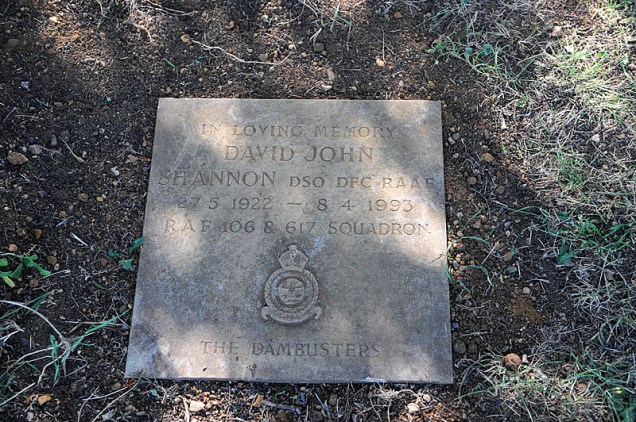
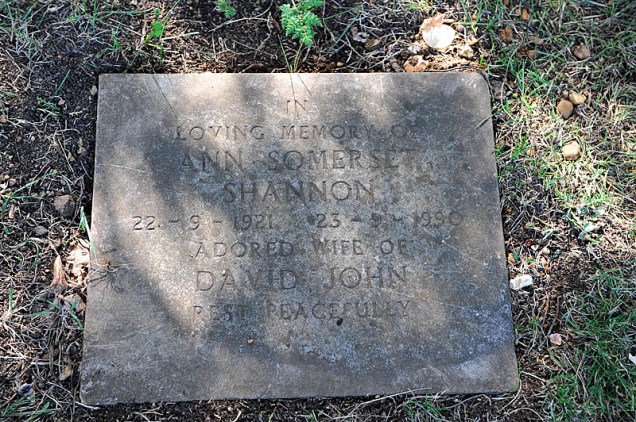
David and Ann Shannon’s headstones

Although David Shannon was an Australian, he stayed on in England after the war, joining Shell as an executive. He spent some time in both Colombia and Kenya before returning to the UK. He died on 8 April 1993, shortly before the planned 50th anniversary reunion of those who took part in the Dams Raid.
Shannon’s romance with Ann Fowler, a WAAF officer serving with 617 Squadron, and their subsequent marriage is a recurring theme in Paul Brickhill’s book, The Dam Busters. Ann Shannon died a couple of years before her husband and they are both commemorated with stones in the churchyard of St Michael and All Angels in Clifton Hampden, Oxfordshire. The size of the stones would indicate that they were both probably cremated.
Shannon’s obituary in The Times can be read here.
Pictures kindly sent to me by reader Paul Hilton.

Clifton-hampden-Shannon1clifton-hampden-shannon2

AV Roe and 100 years of British flying

In the rush of dealing with a major computer problem and getting away on holiday (in which I completed the Coast to Coast walk, 192 miles from St Bees Head to Robin Hood Bay — more on this later) I failed to notice that the centenary of the first British powered flight had taken place. This was undertaken by none other than Alliott Verdon Roe in a triplane of his own design, on Walthamstow Marshes in London, on 13 July 1909. The wonderful Diamond Geezer has reported on this event in his own indomitable way, and provided his usual eclectic list of links to further information about the famous aviation pioneer. From this I learnt that Roe himself developed some rather unsavoury political views, and was a supporter of Oswald Moseley, who was of course interned during the Second World War.
Ironic, then, that the company Roe founded would go on to make the War’s most famous British heavy bomber, the Avro Lancaster, and play a huge part in defeating the fascist war machine.

In the rush of dealing with a major computer problem and getting away on holiday (in which I completed the Coast to Coast walk, 192 miles from St Bees Head to Robin Hood Bay — more on this later) I failed to notice that the centenary of the first British powered flight had taken place. This was undertaken by none other than Alliott Verdon Roe in a triplane of his own design, on Walthamstow Marshes in London, on 13 July 1909. The wonderful Diamond Geezer has reported on this event in his own indomitable way, and provided his usual eclectic list of links to further information about the famous aviation pioneer. From this I learnt that Roe himself developed some rather unsavoury political views, and was a supporter of Oswald Mosley, who was of course interned during the Second World War.

Ironic, then, that the company Roe founded would go on to make the War’s most famous British heavy bomber, the Avro Lancaster, and play a huge part in defeating the fascist war machine.

Big Brother and the Bouncing Bomb

I don’t know who watches Channel 4’s Big Brother these days – I certainly don’t, and nor do my two teenage children and their friends – but people who do might be intrigued to know that underneath the house is the water tank used in the 1955 film, The Dam Busters. Although various locations around the UK were used in the making of the film, much of it was actually shot on three huge sound stages built at Elstree Studios. One of these was presumably constructed around the tank (although Jonathan Falconer’s useful book, Filming the Dam Busters, is not specific about this). Other important landmarks in cinema history shot here include The Young Ones (Cliff Richard! Robert Morley!!?) and Monty Python’s Meaning of Life (the one with Mr Creosote).

Bouncing bomb in Newark

There are several of the prototype bouncing bombs used in the training for the Dams Raid displayed around the country, but the good news is that there is now one more, at thr Newark Air Museum. (Strictly, this is actually the one previously on display in York, so it doesn’t count as a ‘new’ one.)
It joins a growing list of Dambuster/Barnes Wallis related artifacts on display in Newark:

– A Lancaster fuselage section from a 9 Squadron aircraft W4964, which dropped a Barnes Wallis designed Tallboy bomb on the Tirpitz battleship; 
– A memorial plaque loaned to the museum by Jan van den Driesschen, who tends Guy Gibson and Jim Warwick’s graves in Holland [Gibson was leader of the Dambusters Raid and Warwick was an Instructor from 1661 HCU at RAF Winthorpe and he was also Gibson’s navigator on the flight when they were killed] 
– A propeller blade from Lancaster AJ-S flown by Pilot Officer Louis Burpee, which was shot down in Holland in wave 3 of the Dambusters Raid  

If you are in the area it may be worth a visit!

I took my ukulele to the party…

… but, this time, some one did ask me to play! Even better, it was at a Prom Concert.
It’s pick up a plectrum time at the Proms as the wonderful Ukulele Orchestra of Great Britain invite you to join in their performance in the Royal Albert Hall on Tuesday 18 August. They will be performing loads of favourites including, of course, The Dam Busters theme, and you yourself can play along (if you have a ukulele) in an audience participation rendition of Beethoven’s Ode to Joy. The whole thing will be live on Radio 3 if you aren’t able to get to the Albert Hall on the night.
You can see the Orchestra’s version of The Dam Busters here, in a Youtube video recorded at the Shrewsbury Folk Festival. (It’s about 06.55 minutes in after Pinball Wizard and The Good, the Bad and the Ugly.)