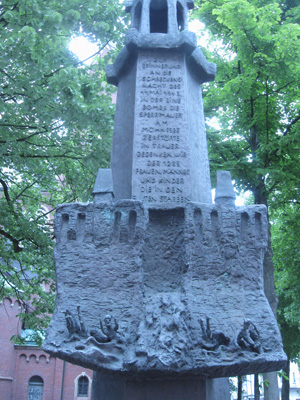
Barlow crash site

AJ-E 2983

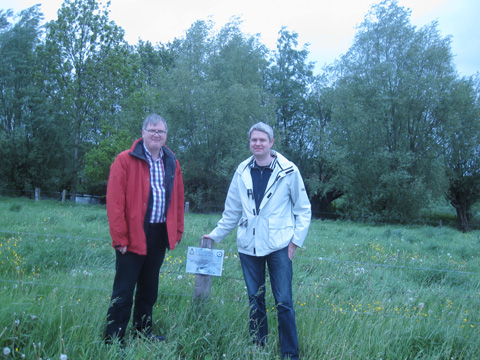
Today I was lucky enough to be shown the site where Norman Barlow’s AJ-E crashed on the Dams Raid, just outside Haldern in the Northern Rhineland area of Germany. My guide was Volker Schurmann, shown (above right) along with your humble scribe, who has been the first person to place a plaque on the site, and who is now campaigning to get a permanent memorial built.
More about this tomorrow!

Dambusters Blog at the Dams

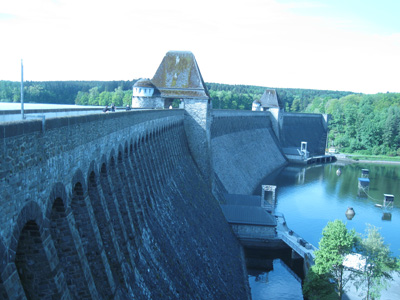
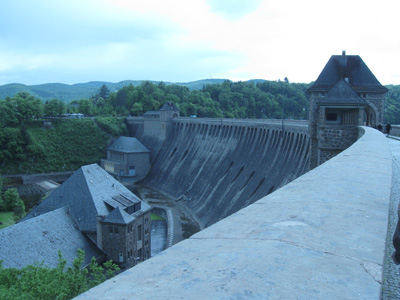
Five years after starting this blog, and a lifetime after first hearing about the Dams Raid, I’m excited to report that I’m writing this tonight in a hotel overlooking the Mohnesee. It’s a quiet and peaceful sight tonight, very different from what it must have looked like seventy years ago. Tomorrow morning we will walk the Dam, pay our respects at the memorials in the villages below it, and then go on to the Eder Dam and visit its museum.

UPDATE 22 May
More pictures will follow, but here are the first three.

Mohne 2967

The Möhne Dam

Eder 2969

The Eder Dam

Neheim 2979

The memorial in Neheim

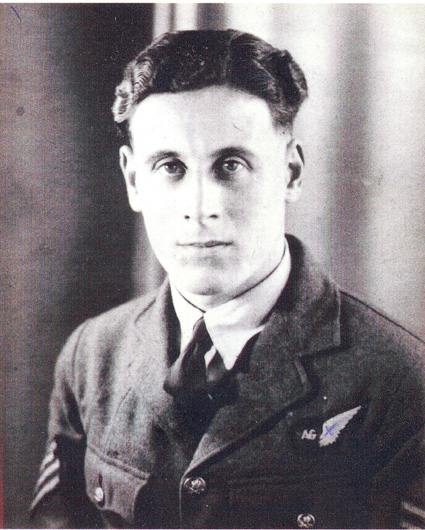
Dambuster of the Day No. 34: Victor Hill

Hill CNV00001 lores

[Pic: Valerie Ashton]

Sgt V Hill
Front gunner

Lancaster serial number: ED906/G
Call sign: AJ-J
First wave. Fifth aircraft to attack Möhne Dam. Mine dropped accurately, causing large breach. Aircraft returned safely.

Early in May 1943, not much more than a week before the Dams Raid was due to take place, a decision was taken to replace David Maltby’s front gunner, probably for unknown disciplinary reasons. With the operation so close, an experienced gunner was needed to step into the breach, and Victor Hill was hurriedly summoned from 9 Squadron, based at RAF Bardney.

Unlike the rest of David Maltby’s crew, Victor Hill had plenty of operational experience. He had flown twenty-two operations on Lancasters between October 1942 and March 1943 and had taken part in some of the war’s most famous raids, including the daylight raid on the Schneider works at Le Creusot in France.

Victor Hill had been born in Gloucestershire on 6 December 1921. He was an only child, the son of Harry and Catherine Hill, who both worked at Berkeley Castle. He was brought up on the castle estate and went to the local school. After leaving school, he also worked at the castle, as a gardener.

Hill joined up as ground crew, but volunteered for aircrew and trained as a gunner when the heavy bombers began to arrive and there were many more chances to fly. His first posting was to 9 Squadron in August 1942, round about the time it was posted to Waddington and converted to Lancasters from Wellingtons. He joined a crew piloted by Sgt Charles McDonald, a Canadian, and flew most of his operations with them.

In mid February 1943, most of this crew moved on to 83 Squadron, but Hill was left behind as a spare gunner and flew on his last operation in 9 Squadron on 8 March, with Sgt Doolan as the pilot.

After the Dams Raid, Hill carried on flying with the rest of David Maltby’s crew until they all took off from RAF Coningsby on 14 September 1943 on 617 Squadron’s first major operation since the Dams Raid.

In common with his pilot, he was also a young father. He had married Evelyn Hourihane in 1941, and at the time of the raid they had a two-year-old daughter, Valerie. They were living with her parents in South Wales. In a letter dated 10 July 1943, he told his brother-in-law Don that he was looking forward to seeing his wife and daughter again in August:

I think everyone must know Eve & myself on Cardiff station now as I say cheerio to her there so often. Val made it even harder this time, when I left, she was standing on the door with mam, waving her little hand and saying ‘Daddy’ that gave me one thought, well this is certainly worth fighting for. I’m sure you will love her when you see her again Don I don’t think Val was walking when you saw her last …
Well Don, roll along August 11th and lets hope we meet this time.

Victor Hill is commemorated on the Runnymede Memorial.

More about Hill online:
Commonwealth War Graves Commission
Breaking the Dams website

KIA 15 September 1943.

Rank and decorations as of 16 May 1943.
Sources: Charles Foster, Breaking the Dams, Pen and Sword 2008
Richard Morris, Guy Gibson, Penguin 1995
John Sweetman, The Dambusters Raid, Cassell 2002
Further information about Victor Hill and the other 132 men who flew on the Dams Raid can be found in my book The Complete Dambusters, published by History Press in 2018.
All the hits and more

Well, all I can say is Wow!
I got 22,000 views on this blog yesterday, which is more in one day than I got in the first year of writing it, back in 2008.
So if you are a new reader, welcome, and I will just take a few seconds of your time to tell you a little about what you will find here.
I set up the blog in order to provide a focus for news and information about the exploits of the RAF’s 617 Squadron from its formation in March 1943 through to the end of that year – in other words the period around the Dams Raid itself and the few months that followed.
The motive was because having written a book about my uncle David Maltby, the pilot of AJ-J on the raid, and who was sadly killed four months later, I could find no space to provide updated information which might have been of interest to readers.
A blog seemed the obvious answer and, five years later, it’s still here.
So, what you will  find below is an eclectic mix of links to news stories, bits of information and other nuggets which appeal to me.

There is a complete list of everyone who took part in the Dams Raid. This is an accurate list of the 133 aircrew who took part, so please don’t write to me asking if so-and-so took part in the raid without checking it first.

There is a Dambuster of the Day feature, which will eventually build up into a series of profiles of all the Dambusters. There is a slight hiatus in this at the moment because of the many excitements of the 70th anniversary, but the series will resume next week and will be completed by the end of August 2013.

There is as much information as I can glean about the forthcoming remake of the 1955 film. (The main news is that there is no news. We are told that the project will come to fruition sometime, but we don’t know when.) Check this category to get the latest update.

Do get in touch if you want to know more, or leave a comment below. Due to pressure of time I don’t always answer comments, but I do read every one, and really welcome your feedback.
You can follow the blog on Twitter, or sign up to get an email every time a new post is published. I won’t spam you, I promise.

The Dam Busters: an almost complete picture

BBC pictureboard

Greig Watson and his colleagues at BBC online have been slaving away for the last few weeks trying to get a complete pictureboard of all 133 aircrew who took part in the Dams Raid.
Believe it or not, a display of this type has never been published before, and they deserve huge credit just for taking on the work.
However there are a few gaps, and the Beeb is very keen to find a relative somewhere who can help find a picture of the missing aircrew. All of them are British, so there should be a good chance that together we can complete the jigsaw.
Here are the missing photos:
David Horsfall (Now found!)
John Marriott (Now found!)
Michael Fuller (Now found!)
John Kinnear (Now found!)
Alan Gillespie (Now found!)
Robert Marsden (Now found!)
Jack Barrett (Now found!)
Thomas Johnston (Now found!)
Harry Strange (Now found!)
Daniel Allatson (Now found!
Dennis Powell (Now found!)
Norman Burrows (Now found!)

If you are related to any of these men, or know of a source for a picture of them, please let me know (leave a comment below or send me a private email) , or log onto the BBC site and send them the details.

(I can claim a modest part in this work, having helped the BBC with some of the picture research.)

Not a dry eye

The RAF did us proud last night. Many of you will have watched the sunset ceremony from RAF Scampton televised live on BBC2. As I was there and have been travelling since, I have yet to see the recording but I can tell you that it was a very emotional event. The undoubted highlight was the landing of the BBMF Lancaster, and the few moments as it taxied from the runway right up to the band, who were playing the last few chords of The Dam Busters march. It was perfectly timed, and well worth several rounds of applause.
I’m told that the BBC covered this very well in glorious widescreen TV definition, but to get the real life experience of what it felt like being there, watch this video shot by my sister Sarah on her iPad, now posted on Youtube. This is what it was like on the ground.
(Well done, girl!)

http://youtu.be/8qawDkirUtA

On the road to Scampton

If you are not, like me, lucky enough to have a ticket for the Dambusters 70th anniversary Sunset Ceremony taking place at RAF Scampton at 7pm tonight, then you can watch it live on BBC2 in a special programme being introduced by Dan Snow.
The Lancaster flypast at the Derwent Dam took place earlier today in what looks to have been very pleasant wether conditions. Let’s hope it continues for another few hours!
For an excellent background piece on the raid on the BBC website by Greig Watson, click here and an interactive map of the routes, click here

Let us not forget all those lost this day, 70 years ago

At a commemoration at the Eder Dam tomorrow morning, these words from the present Commanding Officer of 617 Squadron, Wg Cdr David Arthurton, will be read out:

70 years ago today, pilots from No. 617 Squadron of the Royal Air Force launched an audacious and daring long range attack against the Eder, Mohne and Sorpe dams. A mission that will forever be etched into the history of the Squadron. But heroism and sacrifice is not the prerogative of the military, and there will have been many such acts that night; most unseen and unrewarded.
So even as we, their successors in No. 617 Squadron, join together today to remember our comrades who flew that mission, we join together with you also to remember all those who were affected by the operation that night – regardless of nationality.
Many years have now passed since that night, and today our two countries have never been so closely linked as they are now. So, while it is important to remember the past, and the sacrifice of all those who lost their lives that day, it is even more important to celebrate our present and future together as close friends and allies.

Whatever event we attend today, or if we see or hear the broadcasts or read the press, we should reflect on these words. Let us hope that we never again see the kind of conflict where swaths of people from many different countries are lost, and mourned for generations by those left behind. Those of us who knew these people should make sure that this lesson is never forgotten.

Dambuster of the Day No. 33: John Fort

IWM HU91948

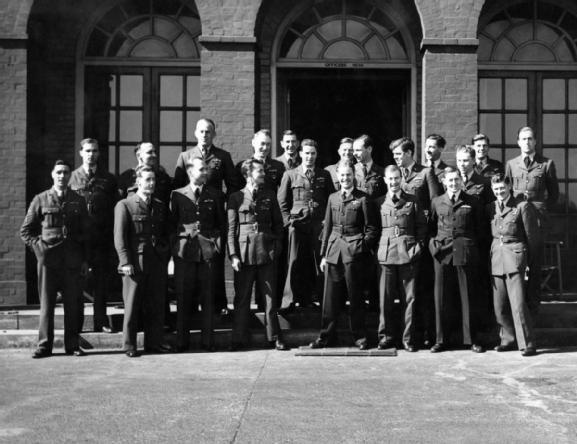
In this picture taken on the morning after the raid, a group of tired looking officers gather outside their mess for an official photograph. Most had been drinking for a number of hours by this stage. John Fort is in the back row, sixth from the right hand side. [pic: IWM HU91948]

Plt Off J Fort
Bomb aimer

Lancaster serial number: ED906/G
Call sign: AJ-J
First wave. Fifth aircraft to attack Möhne Dam. Mine dropped accurately, causing large breach. Aircraft returned safely.

John Fort was the oldest member of the crew of AJ-J. He was born in Colne, Lancashire, on 14 January 1912, one of the six sons of George and Martha Fort, and attended Colne Secondary School. He joined the RAF in 1929 as an apprentice at the No 1 School of Technical Training at RAF Halton. On qualification, he won first prize as a fitter. He then went to sea in the aircraft carrier HMS Glorious. (Between 1918 and 1937 the RAF operated the aircraft which flew on aircraft carriers, and supplied its own ground staff to service them.)

Back on dry land, he continued in groundcrew until the second year of the war, when he volunteered for aircrew training, and was selected as a specialist bomb aimer. At the end of his course he had done well enough to be offered a commission and so it was as a Pilot Officer he arrived at No.10 OTU in September 1942, at RAF St Eval at the same time as navigator Vivian Nicholson and wireless operator Antony Stone. It is likely that the trio teamed up there, along with gunner Austin Williams and pilot Flt Lt William Elder.
On 5 January 1943, the fledgling crew were transferred to RAF Swinderby, to join 1660 Conversion Unit, where William Hatton and Harold Simmonds were added. On 23 February 1943, the new crew were posted to 207 Squadron to begin operations but after Elder was killed on a ‘second dickey’ trip the crew was transferred to 97 Squadron at Coningsby, and allocated to David Maltby. The whole crew was posted together to 617 Squadron on 25 March 1943.

Fort was one of the most proficient bomb aimers in 617 Squadron, and was the A Flight Bombing Leader. Not all the bomb aimers used the wooden triangular sight devised by Wg Cdr Dann, but Fort did and his was given to David Maltby’s father Ettrick shortly after the raid. It is thought to be the only such sight still in existence. It was acquired by a collector in the 1970s and then sold by him in 2015. Fort’s accuracy paid dividends on Maltby’s run-in to the Möhne Dam, and the crew’s mine made the second larger breach which caused its final collapse.

Afterwards there was jubilation, and John Fort joined in the celebrations with much gusto. In the pictures which show the squadron personnel getting on the train to London for the investiture, he can be seen messing about on the footplate.

After the crash on 15 September 1943, in which he was killed along with all his other comrades, squadron adjutant Harry Humphries, who was a good friend, wrote a short pen portrait which is preserved in the archives at Grantham Museum.

A Lancastrian with an outlook on life difficult to beat. Good humoured, slow of speech, but quick in action. A small fairhaired chap, with broad shoulders, well able to carry their responsibilities. He had been in the Service for some years and often said it was a “piece of cake” compared with the competition & throat cutting of civilian business. A very popular member of the Squadron.

John Fort has no known grave, and he is remembered on the Runnymede memorial.

More about Fort online:
Commonwealth War Graves Commission
Breaking the Dams website

KIA 15 September 1943.

Rank and decorations as of 16 May 1943.
Sources: Charles Foster, Breaking the Dams, Pen and Sword 2008
Richard Morris, Guy Gibson, Penguin 1995
John Sweetman, The Dambusters Raid, Cassell 2002

Further information about John Fort and the other 132 men who flew on the Dams Raid can be found in my book The Complete Dambusters, published by History Press in 2018.
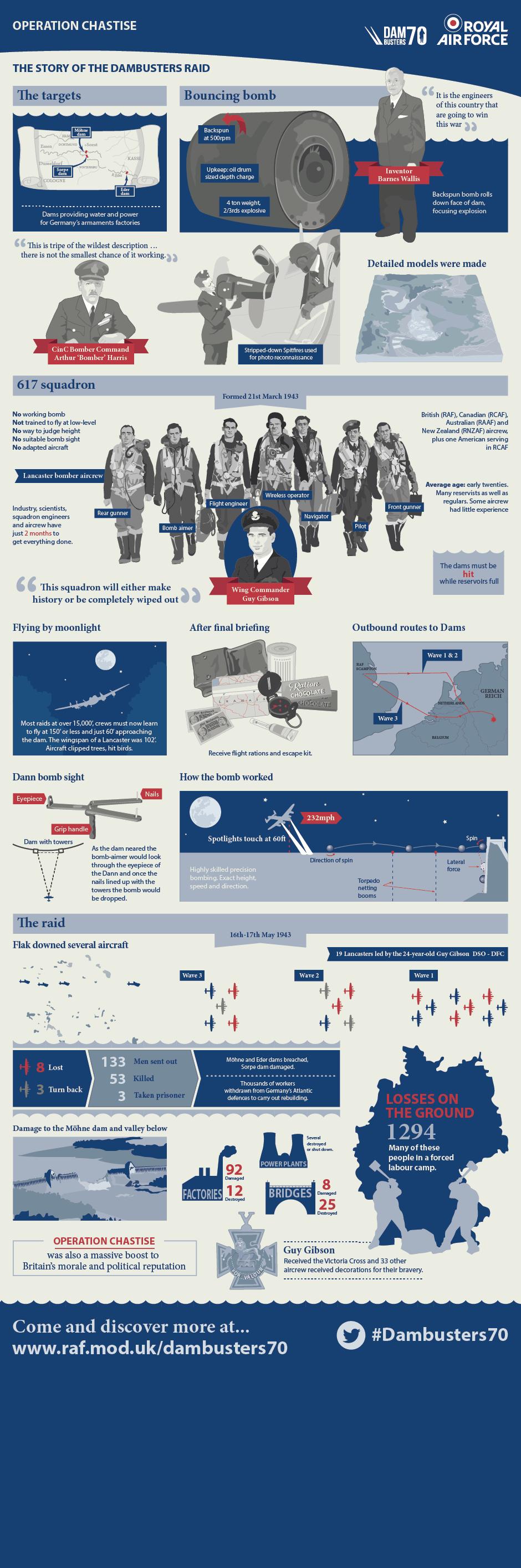
The Dams Raid in infographic form

RAF infographic

There’s an interesting ‘infographic’ on the RAF’s series of pages about the Dams Raid (Operation Chastise). Very simple presentation, but that’s what good information design is about. I’ve reproduced it in thumbnail form above, but it would make a useful wallchart if it could be printed at a large size. Something for the shops at Hendon and Cosford, perhaps?
Incidentally, the RAF’s own summary of the raid is an excellent article, with plenty of detail.
And, even more fun for Twitter-fiends everywhere, the signals sent to and from the 19 Lancasters on Operation Chastise are being re-created as a Twitter feed in real time on the night of 16 May. However, you will have to stay up most of the night if you want to follow these, as the last aircraft landed at Scampton at 0615 the next morning,