This is a rare picture of one of the specially modified Lancasters (given the cumbersome name of ‘Type 464 Provisioning’) used on the Dams Raid. It was taken at RAF Scampton after the war, sometime in 1947. At this stage it was carrying the code YF-A, signifying it was part of the ‘Scampton Station Flight.’
This was the last of the many codes this aircraft had used over the previous four years. For this is Lancaster ED906, which had been flown by David Maltby on the Dams Raid in May 1943, when it was coded AJ-J. After that raid, it wasn’t used again in operations until, in the autumn, it was converted back to standard Lancaster form, with a normal bomb-bay mechanism but no doors, and given the code KC-J. It was then flown by 617 Squadron’s Flt Lt BW Clayton on five operations between 11 November 1943 and 4 January 1944.
This is where things start getting complicated because it was then converted back to ‘Dambuster’ type, and given another new code, AJ-G, which of course was the code carried by Guy Gibson’s completely different Lancaster (ED932) on the Dams Raid.
At some point in 1944 it was flown to RAF Metheringham where it was used as a spare aircraft by members of the station staff. One of these was Sqn Ldr Johnny Meagher who was attached to 106 Squadron as an instructor in his six month break between operational tours. As one of his crew has recently recalled:
My second skipper S/Ldr. Johnny Meagher became an instructor pilot attached to 106 squadron Metheringham for his 6 months rest period after his first tour with 61 squadron. AJ-G was parked there as tour expired in its dambuster configuration. Johnny used it regularly for pilot training, familiarisation flights & as a general hack for shuttling the CO & others around & picking up off base crews etc.
ED906 was then taken to Coningsby and finally into storage at 46 Maintenance Unit in Lossiemouth.
After the war, ED906 was one of the three Dambuster aircraft brought out of storage and used in Operation Guzzle, the disposal of the ‘Upkeep’ revolving mines used in the Dams Raid. There were some 37 of these weapons left over, and each had to be individually dumped into the sea just beyond the edge of the Atlantic shelf some 280 miles west of Glasgow. This took place between August and December 1946. It may well have still carried the AJ-G code at this stage. After Guzzle it was then recoded YF-A.
It was ‘struck off charge’ (i.e. released for scrapping) on 29 July 1947.
[Some information in this article from Alex Bateman’s posts on Lancaster Archive.]
This is a rare picture of one of the specially modified Lancasters (given the cumbersome name of ‘Type 464 Provisioning’) used on the Dams Raid. It was taken at RAF Scampton after the war, sometime in 1947. At this stage it was carrying the code YF-A, signifying it was part of the ‘Scampton Station Flight.’
This was the last of the many codes this aircraft had used over the previous four years. For this is Lancaster ED906, which had been flown by David Maltby on the Dams Raid in May 1943, when it was coded AJ-J. On the raid, it answered to the call sign ‘J for Johnny’. It wasn’t used again in operations until, in the autumn, it was converted back to standard Lancaster form, with a normal bomb-bay mechanism but no doors, and given the code KC-J. It was then flown by 617 Squadron’s Flt Lt BW Clayton on five operations between 11 November 1943 and 4 January 1944.
This is where things start getting complicated because it was then converted back to ‘Dambuster’ type, and given another new code, AJ-G, which of course was the code carried by Guy Gibson’s completely different Lancaster (ED932) on the Dams Raid, when its call sign was ‘G for George’.
At some point in 1944 it was flown to RAF Metheringham where it was used as a spare aircraft by members of the station staff. One of these was Sqn Ldr Johnny Meagher who was attached to 106 Squadron as an instructor in his six month break between operational tours. As one of his crew has
recently recalled:
My second skipper S/Ldr. Johnny Meagher became an instructor pilot attached to 106 squadron Metheringham for his 6 months rest period after his first tour with 61 squadron. AJ-G was parked there as tour expired in its dambuster configuration. Johnny used it regularly for pilot training, familiarisation flights & as a general hack for shuttling the CO & others around & picking up off base crews etc.
ED906 was then taken to Coningsby and finally into storage at 46 Maintenance Unit in Lossiemouth.
After the war, ED906 was one of the three Dambuster aircraft brought out of storage and used in Operation Guzzle, the disposal of the ‘Upkeep’ revolving mines used in the Dams Raid. There were some 37 of these weapons left over, and each had to be individually dumped into the sea just beyond the edge of the Atlantic shelf some 280 miles west of Glasgow. This took place between August and December 1946. It may well have still carried the AJ-G code at this stage. After Guzzle it received its final code, YF-A.
It was ‘struck off charge’ (i.e. released for scrapping) on 29 July 1947.
[Some information in this article from Alex Bateman’s posts on Lancaster-Archive forum.]

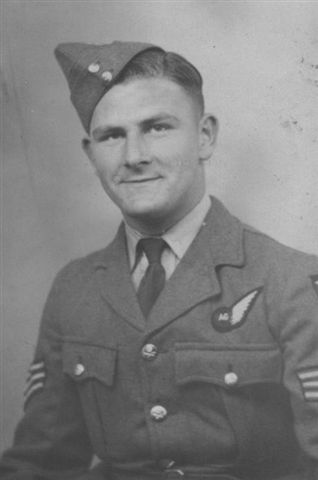 The youngest airman to take part in the Dams Raid was Sgt Jack Liddell, rear gunner in the crew of AJ-E, piloted by Flt Lt Norman Barlow. He was 18 when he took part in the raid, and lost his life along with the rest of the crew when their aircraft crashed on the outward flight near Haldern in Holland. His remains were reburied after the war in


 Dambusters Blog
.jpg)