617 Squadron uniform sold on Ebay ‘likely to be fake’

56_m 30_m 10_m

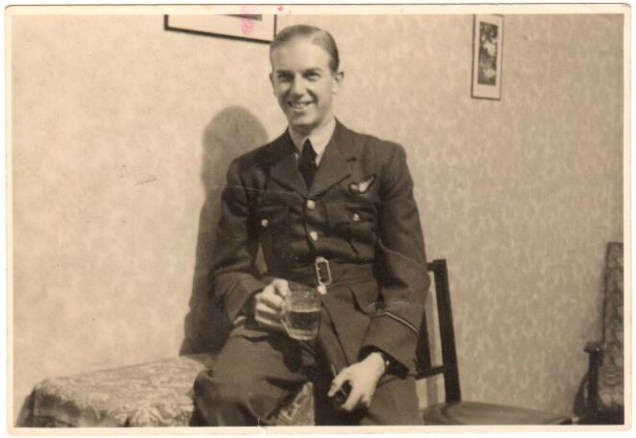
Several items of wartime RAF uniform, some supposedly once owned by 617 Squadron veteran Flt Lt (later Sqn Ldr) Lawrence ‘Benny’ Goodman, were recently sold on Ebay for a total of about £1065. These were the items listed:

The seller claimed that:

Back in 2009, I acquired a large military/aviation collection from a retired private collector. This Service Mess Dress was among the collection and originally belonged to one incredible man … The story goes that he bought these from a dealer that was specialist [sic] in abandoned / unclaimed storage units.

However, Benny Goodman, who is now 96 and who recently attended the 617 Squadron Association annual dinner, is adamant that this uniform never belonged to him. And he points out that he still has his medals (indeed he wore them at the dinner).
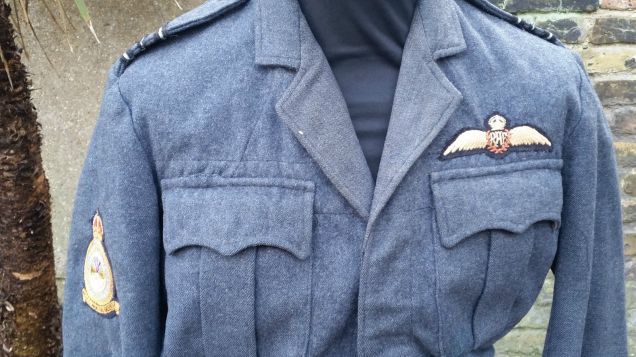
Another piece of clothing is this battledress uniform, which does not appear to have any nametags:

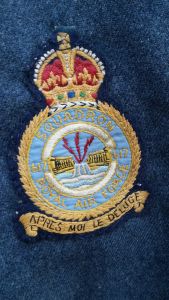
$_57-1$_57-2Although this may be a real Squadron Leader’s Second World War battledress, it would seem to be enhanced by the addition of a 617 Squadron badge on its sleeve. Most experts in RAF militaria would say that it was very unusual for a real pilot to have his squadron crest on his sleeve.
Although there is no claim that this belonged to Benny Goodman, it should be noted that when he finished his tour of operations in 617 Squadron, he was still a Flight Lieutenant. He did not achive the higher rank until his post-war service.
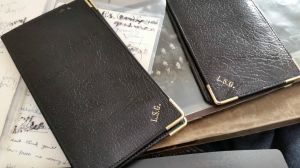
Two more items which did supposedly belong to Benny were these “service wallets”:

$_57First of all, there was no such thing in the wartime RAF as a “service wallet”, for officers or other ranks. Second, Benny also denies having ever owned these. Indeed it is not clear why he would even possess two identical, unused wallets. It should be noted that similar wallets conveniently marked with the initials of 617 Squadron officers have also occasionally surfaced on Ebay.
Apart from the wallets, all the items in the sale would seem to be genuine Second World War material. In some, the value has been enhanced by adding the name of a known veteran to the nametags. The seller may themself not have been involved in this process, but at the very least they should have tried to ascertain whether or not these items definitely belonged to Benny Goodman before making a tidy profit.
Once again, a strict warning should be given to anyone thinking of purchasing similar material on Ebay: be very careful what you buy, and look for direct provenance.

Alex Bateman convicted

Alex BatemanAlex Bateman, filmed in a 2009 TV documentary

Regular readers of this blog will know of the work of Alex Bateman, a long-time researcher of the Dams Raid and author of the book, No 617 ‘Dambusters’ Sqn, (Osprey 2009). Over the eight years I have been writing this blog, he has sent me a number of pictures and pieces of information and expressed forthright views in his comments on various posts.
It is therefore with some shock that I recently learned that on Monday 3 May, at Wood Green Crown Court in London, Alex Bateman pleaded guilty to the possession of indecent images and videos of children. On Friday of last week, 27 May, he was sentenced to 12 months imprisonment.
Comments on this post are closed.

UPDATE 20 June 2016: Story in Harrow Times

Faith and hope at Scampton, 1943

RAF SCAMPTON Chapel in base WWII Revd Don HulbertsThe chapel at RAF Scampton, 1942. [Pic: Stephen Murray]

The spiritual needs of the Allied forces during the Second World War were met by a large number of clergy who volunteered to serve as chaplains for its duration. One of these was Rev Donald Hulbert, Rector of a Suffolk parish, who became the Anglican padre at RAF Scampton in 1942. His wife, Vi Hulbert, a musician and a woman with a strong faith of her own, moved with him to live in two rooms in a builder’s house in a nearby village. The base’s chapel can be seen in the wartime pciture shown above.
They stayed at Scampton for about two years, a period which covered the five and a half months 617 Squadron was present, and were there when the Dams Raid took place. Some thirty years later, Vi Hulbert wrote a short pamphlet called Reflections of a Parson’s Wife. Stephen Murray has kindly sent me a copy of this, along with some other wartime photographs.

Vi Hulbert cover

Mrs Hulbert’s account of the period is very short, but is worth recording. She was responsible for the flower arrangements on the day of the visit to Scampton by the King and Queen on 27 May 1943.
Vi Hulbert p14Donald and Vi Hulbert can be seen together in this picture. Note that she is wearing a ‘sweetheart’ RAF wings brooch.

Vi and Donald hulbert

Among the other interesting pictures in Stephen Murray’s collection is this shot of Scampton CO, Gp Capt Charles Whitworth. The officer on the right is Wg Cdr Everett Briggs, a First World War RAF officer who re-enlisted in the later conflict and who worked on administrative matters at Scampton. The name of the airman on the left is not known. The picture was taken in the vegetable garden on the base, and a couple of men can be seen at work in the background.
RAF Scampton Group Capt John Whitworth 1942 A

All pics courtesy Stephen Murray.

Dams Raid crews remembered at Reichswald

Reichswald graves 2016Pics: Mitch Buiting

Twenty-seven of the 53 Allied aircrew who died on the Dams Raid on 16/17 May 1943 are buried in the Reichswald Forest War Cemetery. They came from the four crews captained by Henry Maudslay, Bill Astell, Norman Barlow and Warner Ottley.
Last weekend, local photographer Mitch Buiting took new pictures of all their graves in a special tribute for the 73rd anniversary of the operation. They are shown in a composite picture above, and can be seen individually on his Wargraves Photographers Facebook page.
Mitch Buiting is one of the many photographers who do great work for the Findagrave.com project. You can find out more about this here.

A quiet wood in Germany

IMG_6612Pic: Wim Govaerts

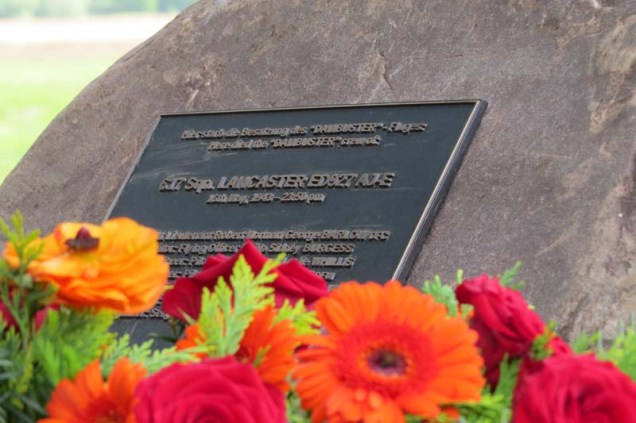
One year ago last weekend, a bronze plaque was unveiled on the edge of a quiet wood near the little town of Haldern in Germany. It is a memorial to the seven men in the crew of AJ-E, who took off from RAF Scampton on the Dams Raid on 16 May 1943, and who died at this spot when their aircraft collided with a power line and crashed.
The memorial was the initiative of Volker Schürmann and his colleagues in the Haldern local history society. Those of us who were present remember it with affection and gratitude, and look forward to continuing the friendships formed on that day for many more years to come.

Burns archive and clothing goes to auction

Photo: Dix Noonan Webb

Sgt Stephen Burns, the young rear gunner in Geoff Rice’s crew, spent several hours on the night of the Dams Raid soaked in a disgusting mixture of Elsan contents and seawater after their aircraft nearly came to grief over the sea. Flying in the second wave and tasked with attacking the Sorpe Dam, AJ-H had crossed the narrow neck of Vlieland at 2259 exactly on track. Past the danger point, Rice gained altitude briefly to check position and then went low again to turn south-eastwards towards the Ijsselmeer. The bright moon shining on the water made height difficult to judge and flight engineer Edward Smith was about to warn Rice that the altimeter was reading zero when there was a huge jolt. Instinctively Rice pulled upwards and felt another ‘violent jolt’.
AJ-H had hit the water twice. The first impact had torn the mine free and sprayed water up through the bomb bay. The second had forced the fixed tail wheel up through the fuselage and demolished the Elsan lavatory just in front of the rear turret. A revolting mixture of its contents, disinfectant and sea water had poured into the turret and immersed gunner Stephen Burns up to his waist. His shout of ‘Christ, it’s wet back here!’ was pretty understandable.
Burns flew with Rice and the rest of his crew on the handful of successful operations they undertook between the Dams Raid and December 1943, and was promoted to Flight Sergeant. However, the crew’s luck ran out on 20 December when they were hit by flak 14,000 feet above Merbes-Le Chateau in Belgium. Although Rice gave the order to bale out, there wasn’t time and the aircraft exploded. Rice seems to have been thrown clear by the explosion, and somehow landed in a wood but the bodies of the remaining six crew members were found in the wreckage, and they were buried in Gosselies Communal Cemetery, near Hainaut, Belgium.
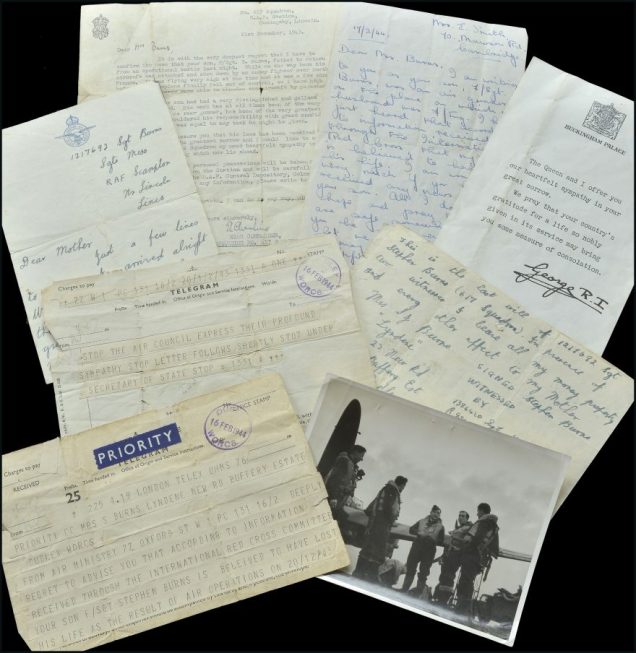
As with many families, the Burnses kept their son’s effects and letters safe and the collection has rarely been seen outside the family. Amongst other things it contains his dress uniform, the gloves which were rescued from his final crash by Belgian civilians and given to his brother after the war, his logbook and several interesting letters.

Lot 1021xxbPhoto: Dix Noonan Webb

The material is now coming up for auction next week at Dix Noonan Webb, and should make a good sum. Once again, I express the hope that if possible it should be made available to the public, but I know that this may not happen if there are private collectors around with deep pockets.

UPDATE 18 May 2016: This material sold at auction for £7,000.

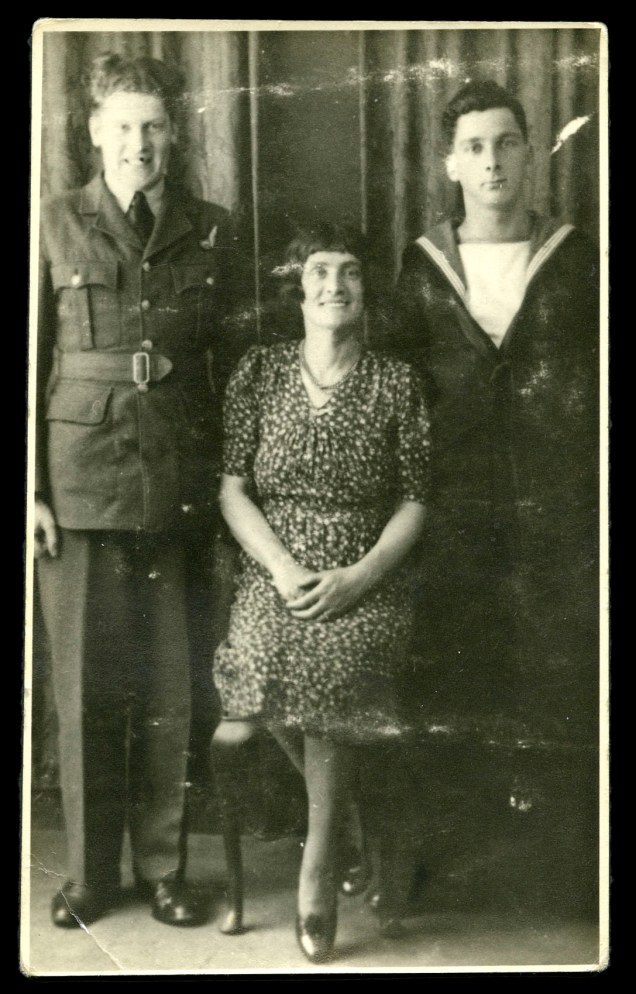
Burns family photo Photo: Dix Noonan Webb

Hat tip: Edwina Towson

More about Stephen Burns here.

Seventy-three years on, the fifty-three who died

Chastise dead
Seventy-three years ago this coming Monday, on 16 May 1943, nineteen Lancaster aircraft from the RAF’s 617 Squadron took off from RAF Scampton on what would become the Allied forces most famous single bombing operation of the Second World War. Their task was to attack and destroy the great hydroelectric dams of the Ruhr and Eder valleys and thereby cause massive disruption to the industrial heartland of the Third Reich.
The method for attacking these dams had been conceived by the engineer Dr Barnes Wallis. For most of the dams this involved dropping a spinning depth charge from a low flying aircraft at a precise distance from its wall. The momentum imparted to the bomb would therefore bounce it across the surface of the water and then, when it reached the wall, it would sink below the surface and explode.
This precision low level attack was completely different from the Allies normal bombing operations, which involved dropping explosives and incendiaries from a great height, and it needed aircrew with a high level of skill and determination. Twenty-one crews were chosen for the raid and undertook specialised training during April and May 1943. Nineteen of these crews were finally selected.
The nineteen crews of seven were mainly British, but of the total of 133 men who took part in the Dams Raid there were 30 Canadians, 13 Australians, 2 New Zealanders and one American, who had joined the Royal Canadian Air Force. They are all listed on the Complete Dambusters website, where the entries link back to each man’s individual profile posted here over the last three years.
Fifty-three men from eight crews died on the raid, and they are pictured above. But we should not forget that the official casualty figures also show that 1,294 people died as a result of the Möhne Dam’s collapse with 47 more lost in the Eder valley. 749 of the dead and missing in the Möhne area were listed as ‘foreigners’, of whom 493 were Ukrainian women labourers, ordered back to their camp for safety when the air raid warnings sounded.

Off to the pub

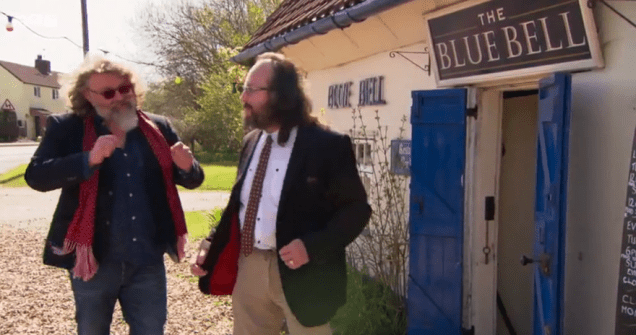
Screen shot HBikers2It was good to see 617 Squadron veteran John Bell on TV last week, being interviewed at East Kirkby by Simon King of the Hairy Bikers. This was one of a series of programmes made by the dynamic duo about British pubs, and it featured several hostelries in the so-called Bomber County of Lincolnshire. John Bell was the bomb aimer in the Bob Knights crew in 1944, took part in more than 50 operations, and won the DFC. He stayed on in the RAF after the war and eventually reached the rank of Wing Commander. (More about his career here.)

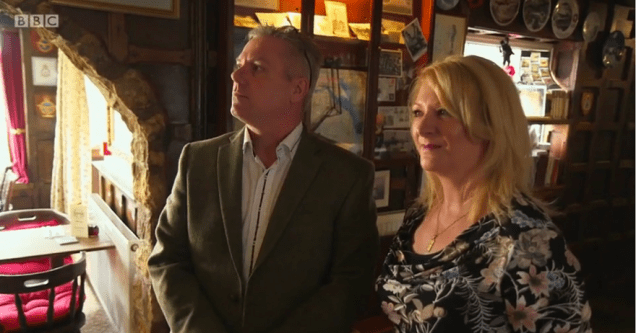
Screen shot HBikers3The programme went on to visit the Dambusters Inn in the village of Scampton. This is a modern pub, as the village didn’t have any licensed premises during the Second World War, but has recently become famous both for its collection of RAF memorabilia, and the picture gallery of all the men who took part in the Dams Raid. This was put together by pub regulars Nigel Favill and Heather Allsworth, who are pictured above.

Screen shot HBikers4The final visit was to the Blue Bell in Tattersall Thorpe. This is a much older pub, and was used by many RAF crews during the war, including 617 Squadron when it was moved to the nearby RAF Woodhall Spa. Many aircrew literally left their mark on the place by signing their names on the ceiling, but sadly this was painted over in the 1950s. (Such was the careless approach to our wartime heritage at the time.)
For the next three weeks or so, and if you are in the UK, you can watch the Hairy Bikers programme on BBC iPlayer here.

David Shannon’s changing crew

Holmes1Plt Off Bernard Holmes, rear gunner in David Shannon’s crew in 106 Squadron. Holmes completed a full tour with Shannon, and was brought to 617 Squadron at Scampton in March 1943. Three weeks later, he was transferred out. Later in the war he joined 77 Squadron and flew on 13 further operations. [Pic: Robert Holmes]

At the end of February 1943, David Shannon finished his tour of operations in 106 Squadron with a trip to St Nazaire. This was the 36th sortie in a run which stretched back to June 1942, shortly after his 20th birthday. During his tour, he had generally flown with a core crew made up of Danny Walker, navigator, Wallace Herbert, bomb aimer, Arnold Pemberton, wireless operator, Douglas McCulloch, mid upper gunner and Bernard Holmes, rear gunner. Over the course of the tour Shannon flew with a number of different flight engineers and/or second pilots, but in the last few months Sgt Cyril Chamberlain became the regular flight engineer.
An enforced change happened in November 1942, when Danny Walker came to the end of his own tour. He was posted to No 22 OTU as an instructor and thereafter a number of different navigators filled in for him. These included the experienced Norman Scrivener and Winston Burnside, both of whom also navigated for Guy Gibson in this period.
Shannon’s last operation in 106 Squadron on 28 February appears to have coincided with the end of the tours of Herbert, Pemberton, McCulloch and Holmes. Under normal circumstances, the crew would have broken up and all would have been sent on instructional duties for a period of six months. Shannon, however, wanted to carry on flying and somehow arranged a transfer to 83 Squadron at RAF Wyton, a Pathfinder outfit. It was there that he got a telephone call from Gibson, asking him to join him at Scampton where he was forming a new squadron.
Chamberlain, Herbert, Pemberton, McCulloch and Holmes were apparently all still at Syerston, waiting for new postings. Consideration was obviously given to reconstituting Shannon’s 106 Squadron crew, since Chamberlain, Pemberton, McCulloch and Holmes were all transferred to the new 617 Squadron at Scampton on or about 25 March 1943. Herbert appears either not to have been asked or to have declined the offer. Also, Shannon’s old crew member Danny Walker was specifically sought out to fill the post of navigator, and was brought over to Scampton from No 22 OTU at Wellesbourne Mountford.
It is not clear exactly what happened next. Shannon undertook two testing flights on 28 and 31 March, but he only recorded the names of the other pilots with whom he flew (Flt Lt Dierkes on 28 March, Flt Lt John Hopgood on 31 March). His next flight wasn’t until 6 April, when he did a 5 hour cross country and bombing trip. This was repeated, over a different route, two days later on 8 April. On both of these flights, a five man crew is recorded. This consisted of Walker and McCulloch, both from his 106 Squadron days, two new names – bomb aimer Len Sumpter and flight engineer Robert Henderson, plus Larry Nichols, a wireless operator borrowed from Melvin Young’s crew.
After the war, Len Sumpter described how he and Henderson were recruited to the squadron. At that stage, he had completed 13 operations in 57 Squadron, based at Scampton. Then his pilot was grounded with ear trouble and the crew were broken up. He and his erstwhile crewmate Henderson knew that a new squadron was being formed in the next two hangars, and heard that Shannon was looking for a bomb aimer and a flight engineer, so they sought him out. “We looked him over and he looked us over – and that’s the way I got on to 617 Squadron.” (Max Arthur, Dambusters: A Landmark Oral History, Virgin 2008, p18.) No date is given for this “interview”, but it must have occurred sometime between 31 March and 6 April.
Sumpter goes on to say that the crew didn’t get their own wireless operator until the end of April. He didn’t know – or didn’t mention – that there were three members of Shannon’s old crew, including wireless operator Arnold Pemberton, kicking their heels on the ground.
On 11 April, Shannon’s logbook records the first flight of a new crew member, rear gunner Jack Buckley. He had been transferred from No 10 OTU, where he was working as an instructor. He was an experienced gunner and had been commissioned, having completed a full tour of operations with 75 (New Zealand) Squadron. Albert Garshowitz (misspelt as Gowshowitz) from Bill Astell’s crew was the borrowed wireless operator on this occasion.
Two days later, on 13 April, a complete squadron crew list was compiled, under the title “Order of Battle”. This is preserved in a file in the National Archives (AIR14/842). It shows Shannon’s crew as: Henderson, flight engineer, Walker, navigator, Sumpter, bomb aimer, McCulloch, mid upper gunner and Buckley, rear gunner. The position of wireless operator is left blank. Flg Off McCulloch is also listed as A Flight Gunnery Leader. Four names are listed as ‘spares’, amongst whom are the other three members of Shannon’s 106 Squadron crew: Pemberton, Holmes and Chamberlain.
Another two days later, on 15 April, Douglas McCulloch attended an Aircrew Selection Board. He must therefore have previously applied for remustering. However, he returned to the squadron and flew on more training flights with Shannon on 19 and 21 April. He was eventually posted to No 13 Initial Training Wing on 1 May.
On 17 April, Bernard Holmes and Arnold Pemberton’s time at 617 Squadron ended, with them both being recorded as being posted to No 19 OTU at Kinloss. There is no record of the destiny of Cyril Chamberlain. Holmes’s son Robert recalls that his father apparently told his wife at the time that he and Pemberton were bored and frustrated through not being kept busy, and asked for a transfer.
Eleven days later, on 24 April, another squadron crew list was published. The Shannon crew now shows two changes. The wireless operator position has been filled by Flg Off Goodale DFC and the mid upper gunner has the handwritten name of Sgt Jagger in a space which had been left blank by the typist. The A Flight gunnery leader is now shown as Flg Off Glinz (from Norman Barlow’s crew). There are no longer any names listed as spares (National Archives: AIR14/842). This date coincides with Goodale’s first appearance in Shannon’s logbook. It is notable that Brian Jagger’s name may appear here, but in fact he did not fly with Shannon until 4 May.
Both men came with a deal of experience. Brian Goodale had a completed full tour and was recruited from No 10 OTU, where Jack Buckley had also been an instructor. Brian Jagger came from 50 Squadron. He had previously flown with John Fraser and Ken Earnshaw, two Canadians in John Hopgood’s crew, and they may have been instrumental in getting him on board.
On this date, David Shannon’s Dams Raid crew was finally established, and they would fly together for the next few months. Quite why three members of his crew from 106 Squadron were earlier brought over to Scampton but never used remains a mystery.
Later in the war, after a spell as an instructor, Bernard Holmes returned to operations with 77 Squadron, and joined a crew skippered by Wg Cdr J D R Forbes, the squadron CO. He remained there until the end of hostilities. He had married his wife Margaret in 1940, and they had two sons, born after the war. The family emigrated to South Africa in 1952, and he died there in 1979.

Thanks to Robert Holmes, Clive Smith, Robert Owen and Nigel Favill for their help with this article.

Snaps from behind the scenes at Scampton in Gillon photo album

debriefing-crewsFay Gillon debriefing an unknown bomber crew. Another copy of this print has the date 1944 on its reverse, and this ties in with the map on the table which is of Northern France. It may be of a 44 Squadron crew, and taken at RAF Dunholme Lodge.  [Pic: Gillon collection; thanks to Robert Owen for further information.]

In March 1943 Fay Gillon, seen in the picture above at work debriefing an unknown bomber crew, was a WAAF officer based at Scampton when 617 Squadron moved in to start training for the Dams Raid. Within a few days, Guy Gibson asked to meet her:

‘Sit down,’ said Gibson as she entered his spartan office. ‘The first thing is: can you keep a secret?’ Gibson’s misgivings about the general inferiority of the opposite sex were made even plainer when he added: ‘I don’t often ask women this.’
The Intelligence Officer assured Gibson that she was well able to keep secrets. Gibson probed further, checking his understanding that Gillon was married and that her husband was overseas. Gillon surmised that the reason for these questions was that as a married woman she would be unlikely to have boy-friends with whom she might talk about squadron matters.
Richard Morris, Guy Gibson, Penguin 1995, p146.

Gibson went on to give her the important task of liaising with 5 Group headquarters over the routes for the training programme, and installed her in an office next to the squadron Navigation Officer, Jack Leggo. Gillon became good friends with Leggo, his skipper Mick Martin, and the rest of his crew, and she flew with them on the final dress rehearsal on the Friday before the raid. Her full account of this trip was published in Morris’s book, as mentioned above, pp160-2. The next day, Saturday 15 May 1943, she was again looking over Martin’s aircraft after its Upkeep mine had been loaded. She may have inadvertently pressed a cockpit lever which dropped it from the aircraft onto the hard standing below. Everyone scattered as quickly as possible, but fortunately the mine didn’t explode.
Fay Gillon died on 5 November 2009 and her wartime photograph album now belongs to her granddaughter, Carissa Howard. Last year, she allowed Australian writer Ian Andrew to publish some of the pictures it contains on his blog. The images provide a further insight into life at Scampton in the spring and summer of 1943.
One of the most interesting informal shots shows a group of officers and some civilians, probably taken outside the officers mess.

617-sqn004[Pic: Gillon collection]

Left to right, this shows: in civilian clothes, the two Vickers test pilots most associated with Operation Chastise, Mutt Summers and Robert Handasyde, an RAF officer with face obscured, Guy Gibson (in sunglasses), Les Munro, Richard Trevor-Roper, Les Knight, unknown RAF officer (holding glass and turned towards camera), David Maltby, Fred Spafford and another unknown RAF officer with face obscured. (Thanks to Robert Owen for identifying Summers and Handasyde.)
Gillon was one of the WAAF officers who accompanied the 617 Squadron contingent by train to London for the investiture at Buckingham Palace. Although she is not named in adjutant Harry Humphries’s account of the riotous railway journey, she is likely to have been a witness to the incident when a drunk and trouserless Brian Goodale was pushed into the compartment in which she was travelling. Humphries had to remove Goodale hurriedly as there were “ladies present” whose modesty had to be protected at all costs. She attended the investiture and the album includes some photographs taken there, including one of the Australians who were in attendance.

617-australians-and-wc-gibsonLeft to right: Tom Simpson, Lance Howard, David Shannon, Bob Hay, Jack Leggo, Mick Martin, Fred Spafford. [Pic: Gillon collection]

By September 1943, 617 Squadron had moved out of Scampton to Coningsby. However, by then her WAAF colleague Ann Fowler had become engaged to David Shannon and Gillon attended their wedding.

dave-shannon-and-ann-fowler

[Pic: Gillon collection]

After the war, Fay Gillon and her husband Peter moved to France and started their family of four children. They later lived in London and then moved to Perth, Australia, in 1980. She returned to the UK on a number of occasions, and was very helpful to a number of people researching the history of 617 Squadron, including myself.
Thanks to Carissa Howard for help with this article.